Martha Tudor’s Spring Dress

The last time I posted, Martha Tudor was in her undergarments. I’ve made tremendous progress and she now has a lovely robe à la francaise for the spring.
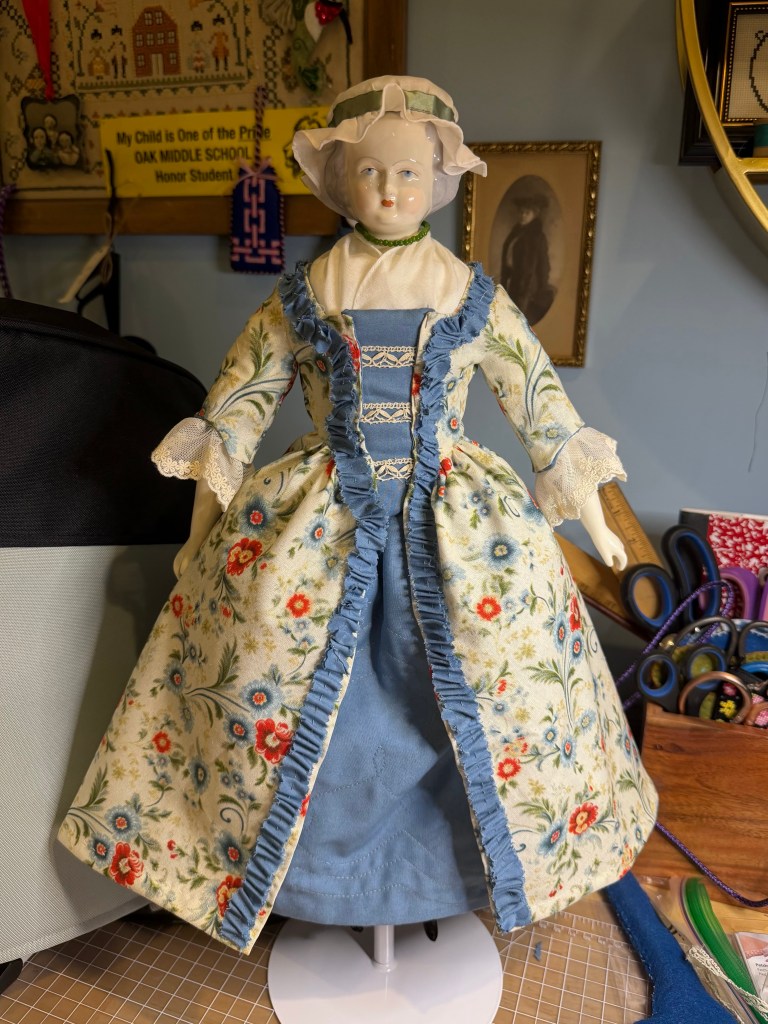
The fabrics are cotton, which was popular in the 18th century.

The robe à la francaise is characterized by pleats at the center back of the gown. I found the instructions from The Doll Book downright confusing so I drafted my own pleats.
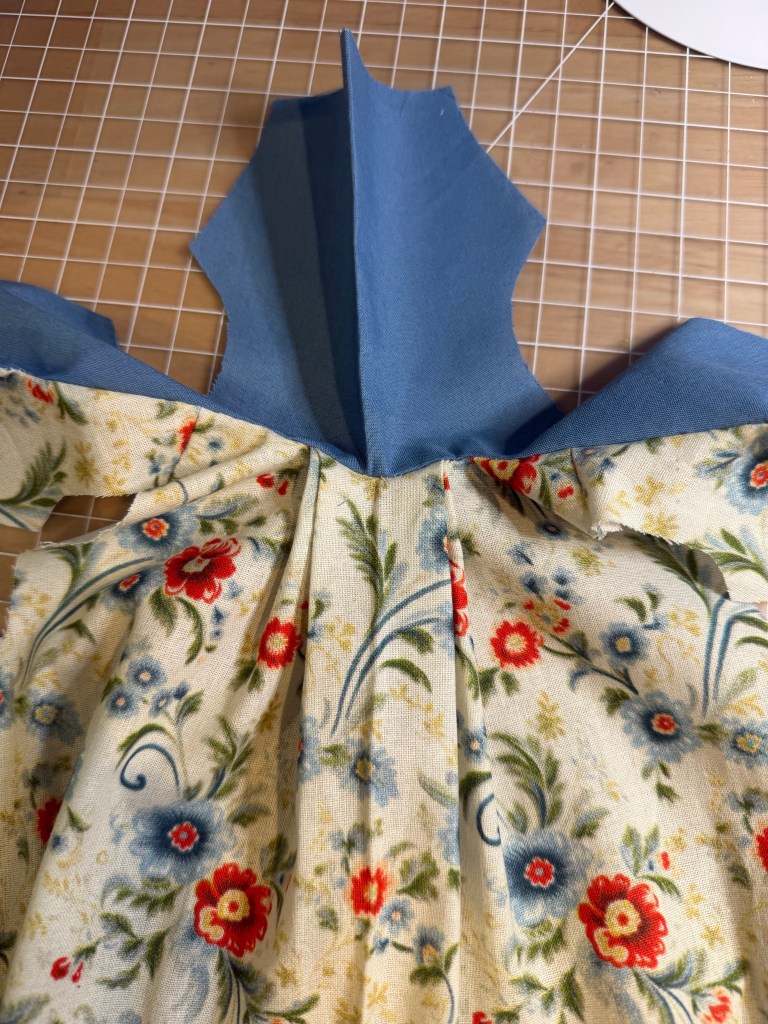
The bodice also includes a lining that is separate from the outer fabric. I do not know if this is historically accurate but it did allow for lovely draping of the pleats in back.
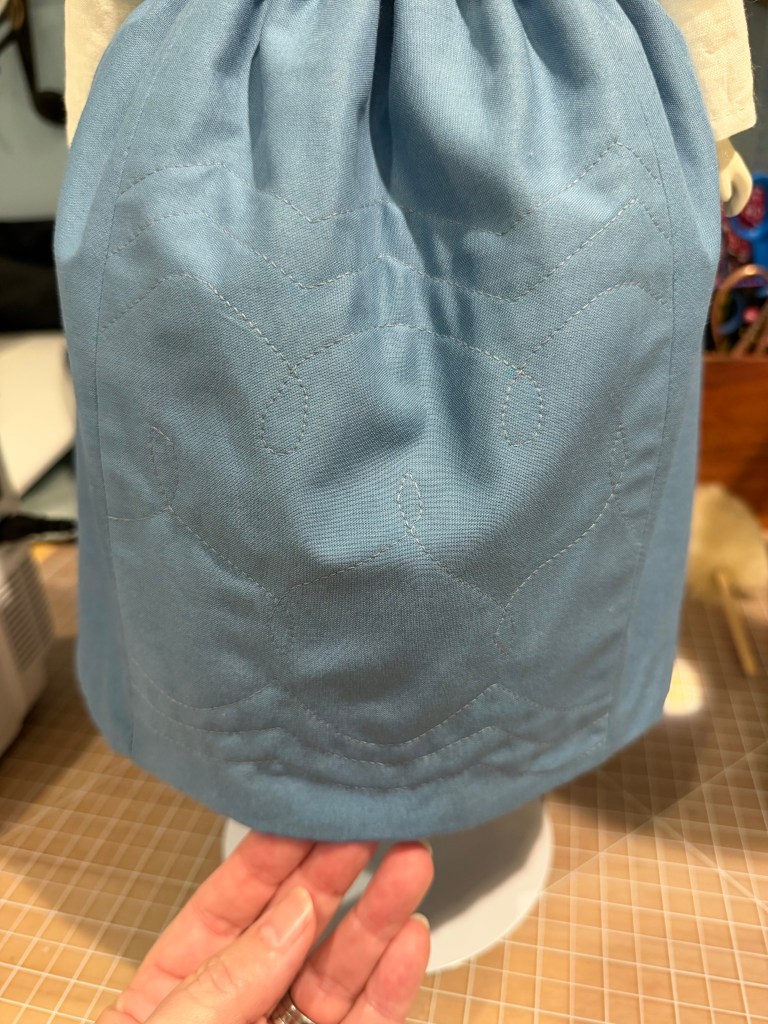
Here you can see the quilting on the front panel of her petticoat. This was sewn by machine and is backed by a piece of plush flannel to give dimension.
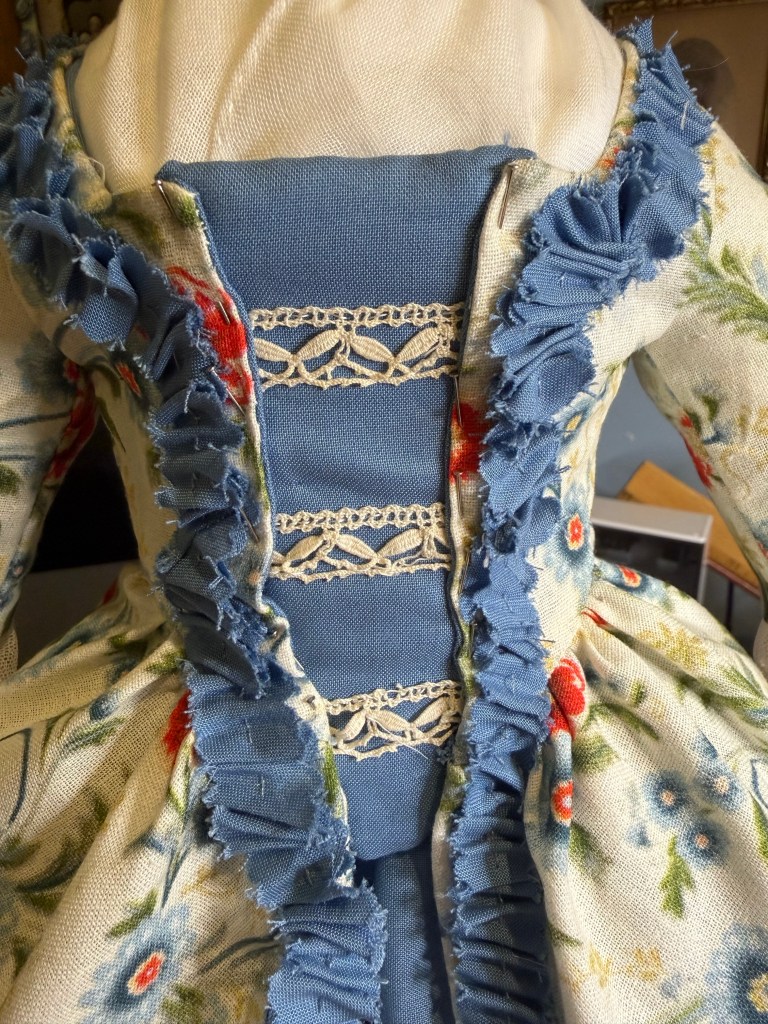
This center piece of the bodice is called a stomacher. It is a firmer piece that is pinned in between the two sides of the bodice. In this case, I cut the base from the back of a notepad, then made a “pocket of the blue and also added a piece of the flannel to soften the front. The lace decoration is vintage tatting I had in my stash.

Yes I hand gathered all the trim. It was more of a pain to stitch it down than it was to make it, honestly!
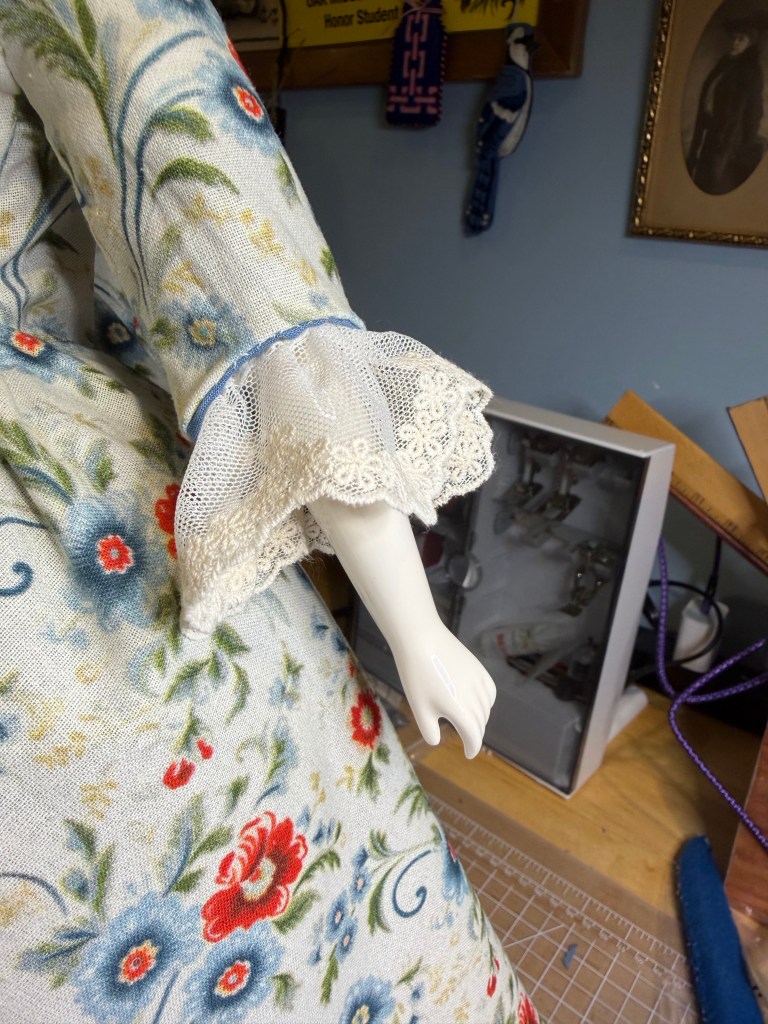
These are the 3/4 sleeves with French lace. This was a popular style of sleeve in the 18th century apparently.
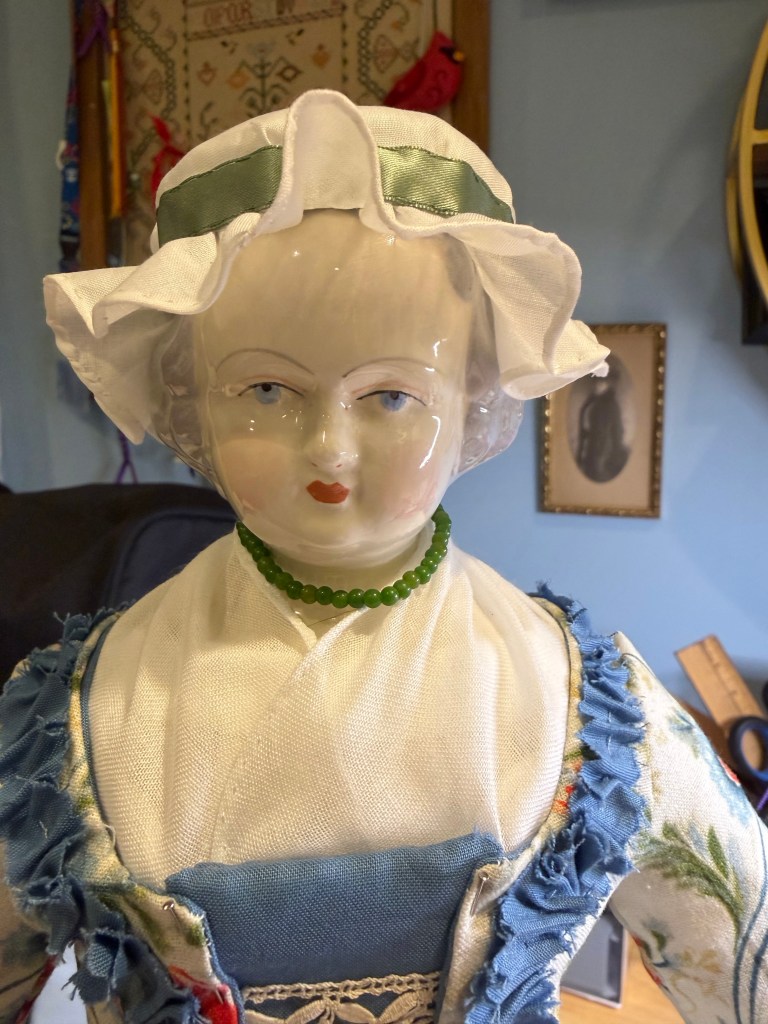
Modesty dictated a fichu be placed in the neck opening of a gown, like this. This piece is batiste and I hand rolled & whipped the edges. It took forever but it’s perfect for such delicate fabric. The fichu here also hides all the repairs where Martha’s chest plate had been broken. The green beaded necklace came with her.

I also made the mobcap. I measured the distance from ear to ear over the top of her head and then added an inch. I used my compass (thank you high school geometry!) to draw the circle and also an outer circle for the brim. The mobcap is made from lawn, which is a little more still than batiste but still a fine and delicate fabric.
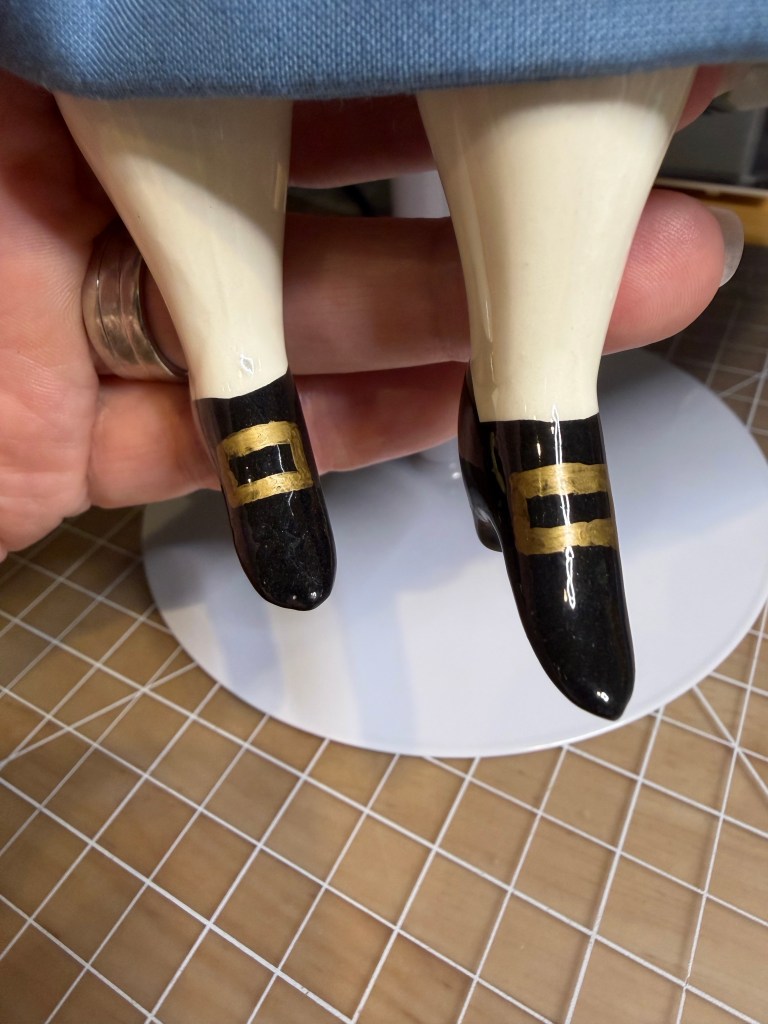
I painted on shoe buckles. My thinking here is that Martha Tudor is already broken and repaired, so changing her feet isn’t going to destroy some collector’s value. Unless it’s 100 years from now. In which case I won’t be around. :-)

I quite like the results! I’m not sure who is next in the project list – I have several to choose from. Stay tuned to find out!

Meet Nell

For someone who is a documented doll disliker, I have become fascinated by them. Not playing with dolls, or displaying them. And not all dolls; I like very specific styles of dolls designed in the mid-nineteenth century. Of course I can’t afford the real dolls – or, more accurately, I won’t afford them.

This doll, Nell, is a reproduction late 1860s-1870s cloth bodied doll. She has China head, hands and feet. I did not make her, but adopted her off eBay. She was designed by Tasha Tudor in 1977. I don’t know much about Tasha Tudor except to say she was an artist who loved dolls. In the 1970s there was a revival of these China head dolls sold as kits for home doll makers. Many brands offered the kits, and I don’t know how accurate they were.

Nell was poorly constructed – her legs are twisted and her arms are attached incorrectly as well as being rather fat. I could have remade her body, but I decided I love her as she is.

Sweet Nell came to me in a truly unattractive outfit. Remember she was made in the 70s. The dress was made from orange sprigged searsucker. Yikes.

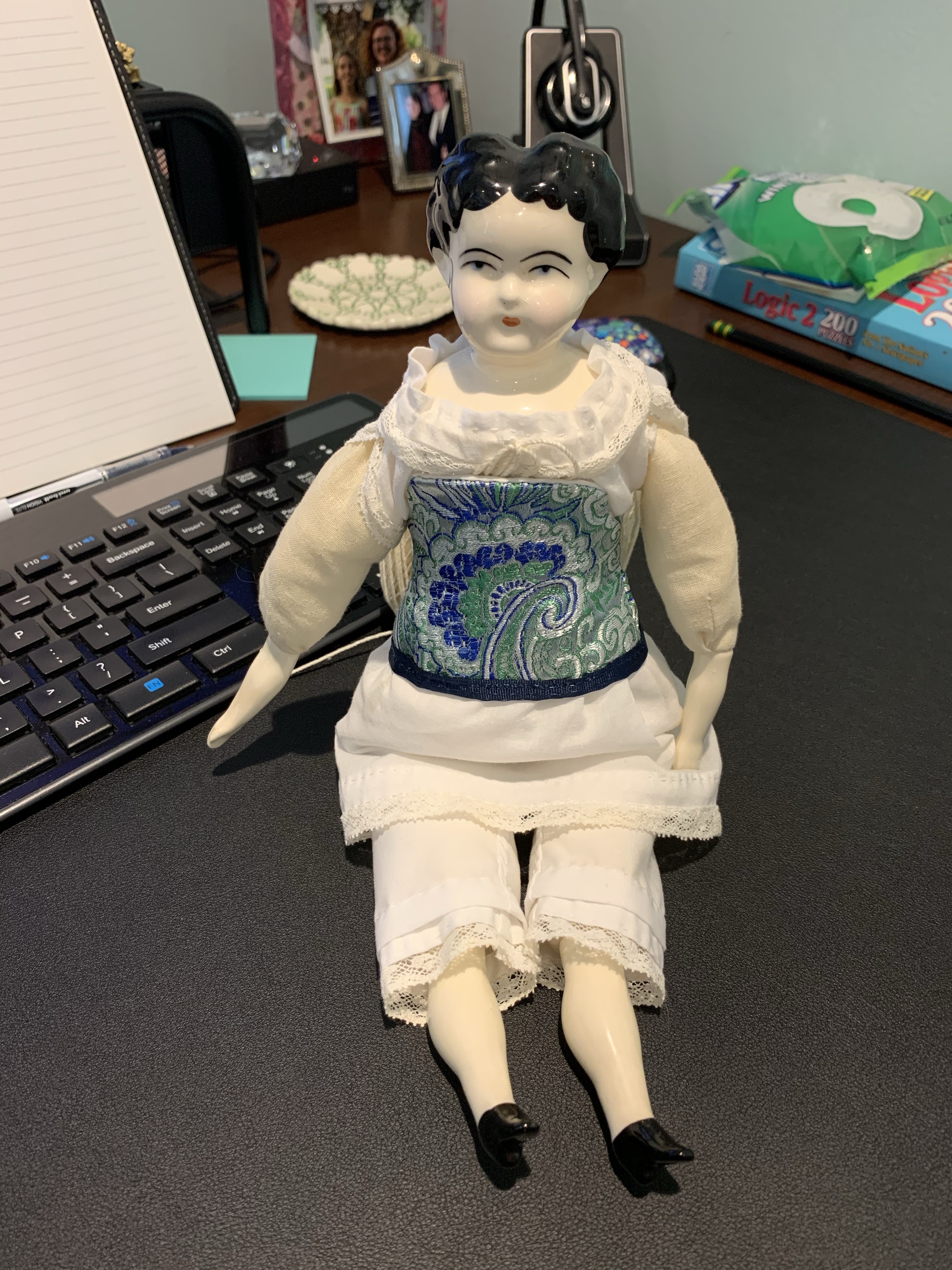
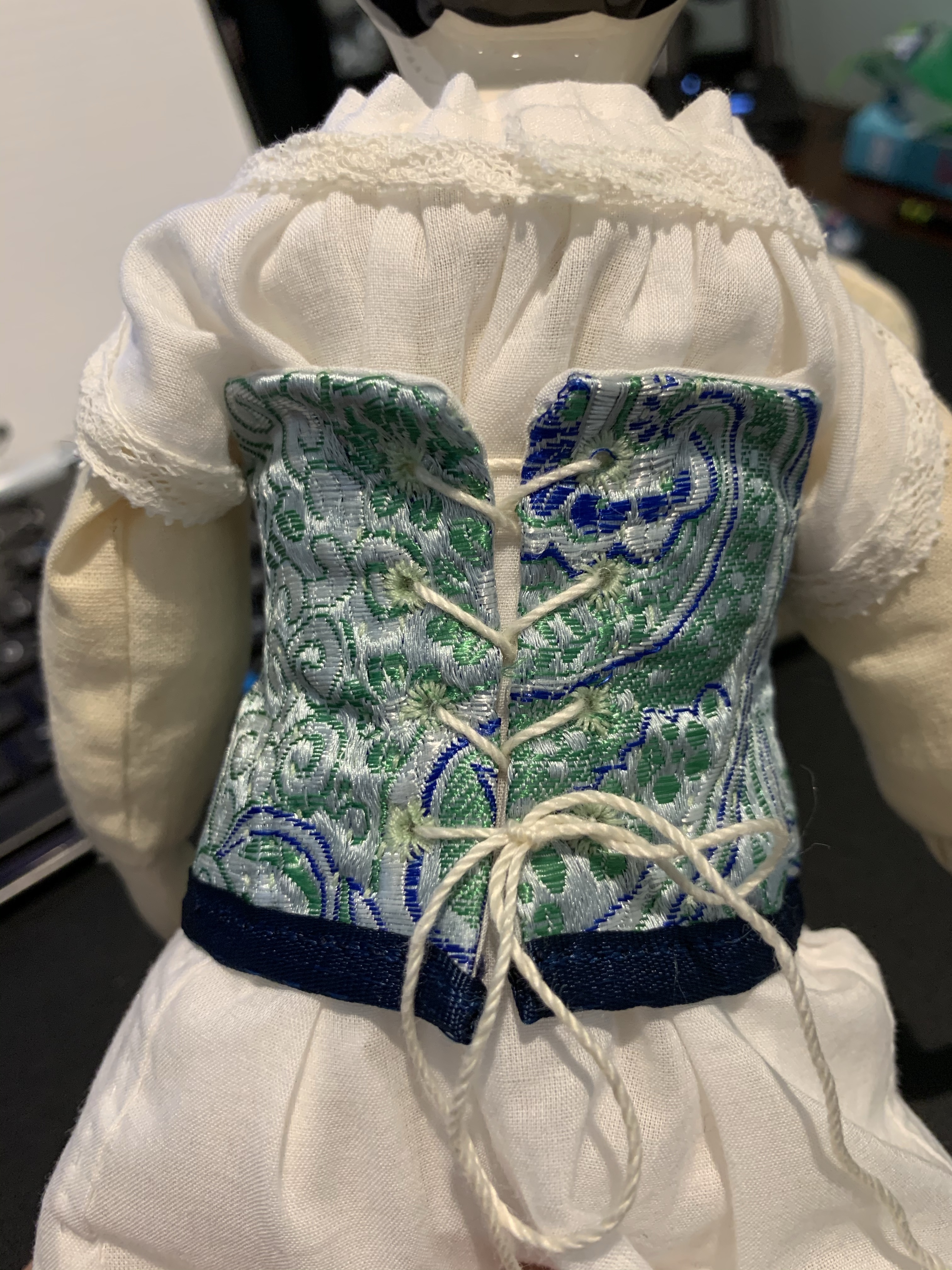
Since I want to eventually use my dolls for teaching and display at history events, I could not leave her in this crazy outfit. From the muslin out, I redressed her. First came a new chemise and drawers from white cotton. I figured for a nicer doll I could have some fun with her corset and made her a corded corset with this beautiful brocade I had. Add a nice tucked petticoat and we are ready to keep going.

At some point after the first photos I remade her chemise. I never did like the first run at it. The new one is tucked to the neckband and lays much more smoothly. Unfortunately for Nell, it took me another several months to make her dress. I took a break to decide exactly what to make for her. Since she is later 1860s, I wasn’t limited to typical hoop skirt styles. While the basic bodice didn’t change too much after 1864, skirts and embellishments did.

I spent some time researching exactly what to make, delving into French fashion magazines and dreaming of the garments I would make her. And then I made a basic, almost boring, dress.

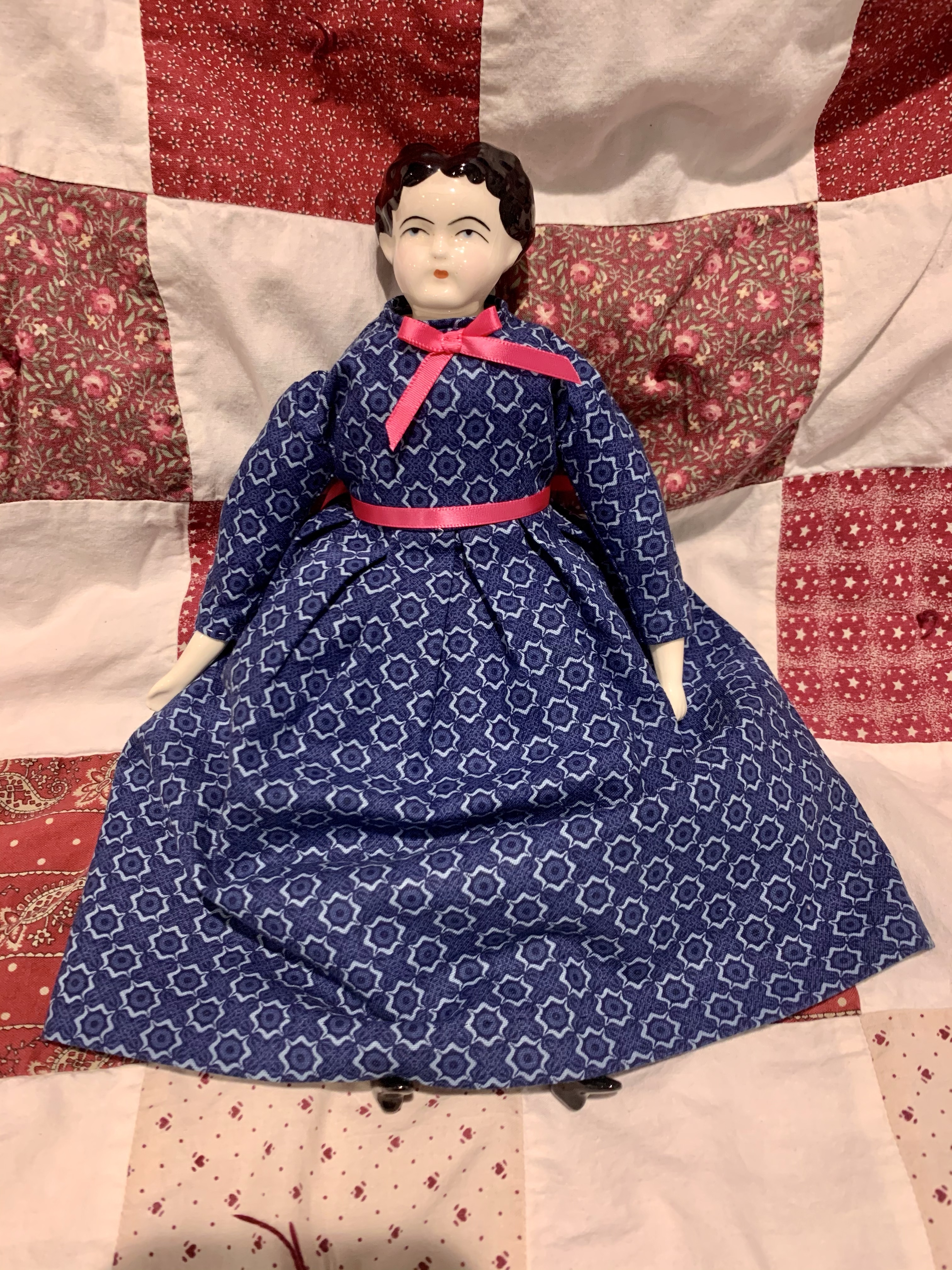
The fabric is cotton meant to mimic a patterned wool, which would commonly have been used. I modeled the dress off the amazingly versatile patterns from Liz Clark, modifying them to fit Nell. The skirt has box pleats at the waist, which were a more stylish method of attaching a skirt. It was a bit boring on its own so I added the pink ribbon bow and belt.

Next episode, look for the gift I created for my sister.