Martha Tudor – Part 1

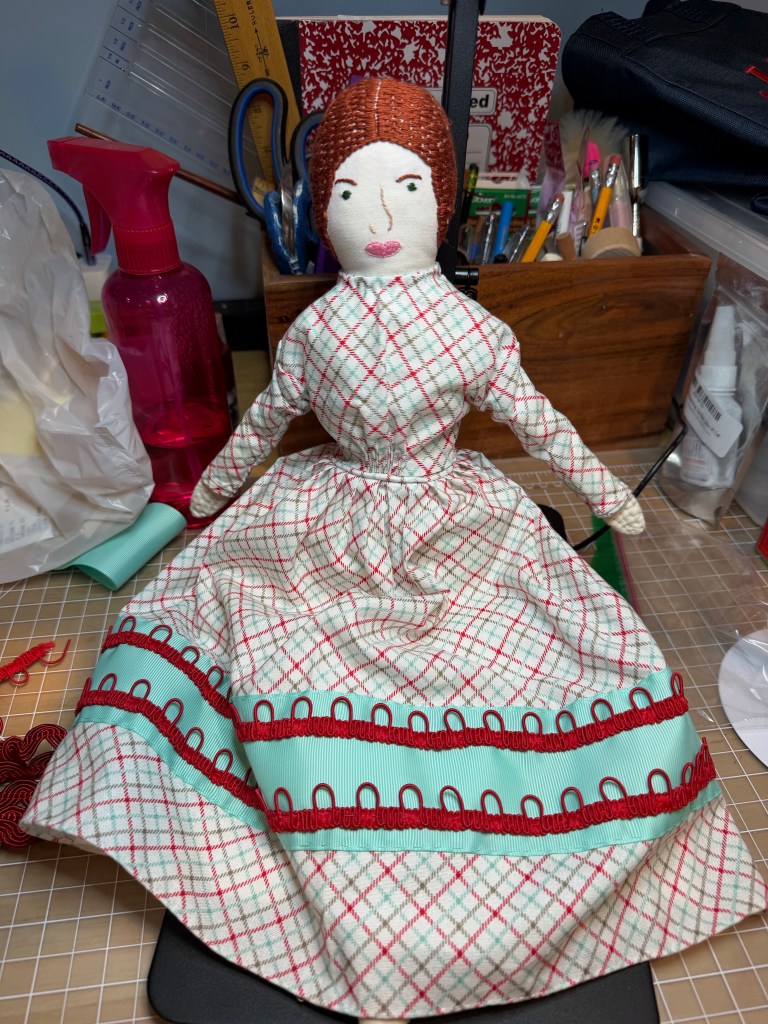
As a fan of Tasha Tudor dolls I regularly check eBay for new items listed. The most common dolls are Meg, Emma, Sally and Nell. Less common but still occasional are Molly and Dora. I have seen Amy, Julia, Lady Patricia, Trudy and Martha only once. When I see these uncommon dolls listed I usually put on a really high maximum bid because I don’t want to lose them.

While I was finishing Julia, I saw an auction for Martha, placed my stupidly high bid and waited for the auction to close. I hate auctions lol. Anyway, I won her and waited with great excitement to receive her because I have only heard of her from a site visitor – never seen before the auction.

The box arrived. Crushed.

Martha had a visit to the French Revolution via USPS or UPS or however she was shipped.

The seller has refunded me.

I lamented this happening to my family and my daughter suggested trying to glue her back together. Could I do that?

I found a number of articles online about fixing a broken chest plate on a doll. A couple referred to this porcelain and ceramic glue.

It comes with some very fine tube tips for highly precise glue application. I felt a bit like one of those artisans at a museum putting together shards of pottery. Ok not really. I actually was thinking of all the moms and dads through the years gluing dolls and cookie jars after the kids got too rambunctious.

Fortunately Martha’s head is intact! I carefully removed the pieces from the body, then tried to figure out how the parts would fit together. A bit of glue on the broken edges, then pressing them together for 30 seconds created the basic bond. This glue needs to cure up to 24 hours.

I’m not thrilled with one seam. I didn’t want to force the porcelain into place and the seam is off just a smidge.

I applied glue to the cracks inside and outside as well. There are a couple of holes where bits of the porcelain has been lost.

When it comes time to reunite her head with her body I may use glue instead of sewing tapes because I don’t want to put too much stress on the china. I am also considering strapping over her shoulders. I had to do that with Julia as her chest plate had cracked between the hole and the edge. There may be a few other alterations in her future as well – painting on gold shoe buckles, stitching in elbows and knees, little things like that.

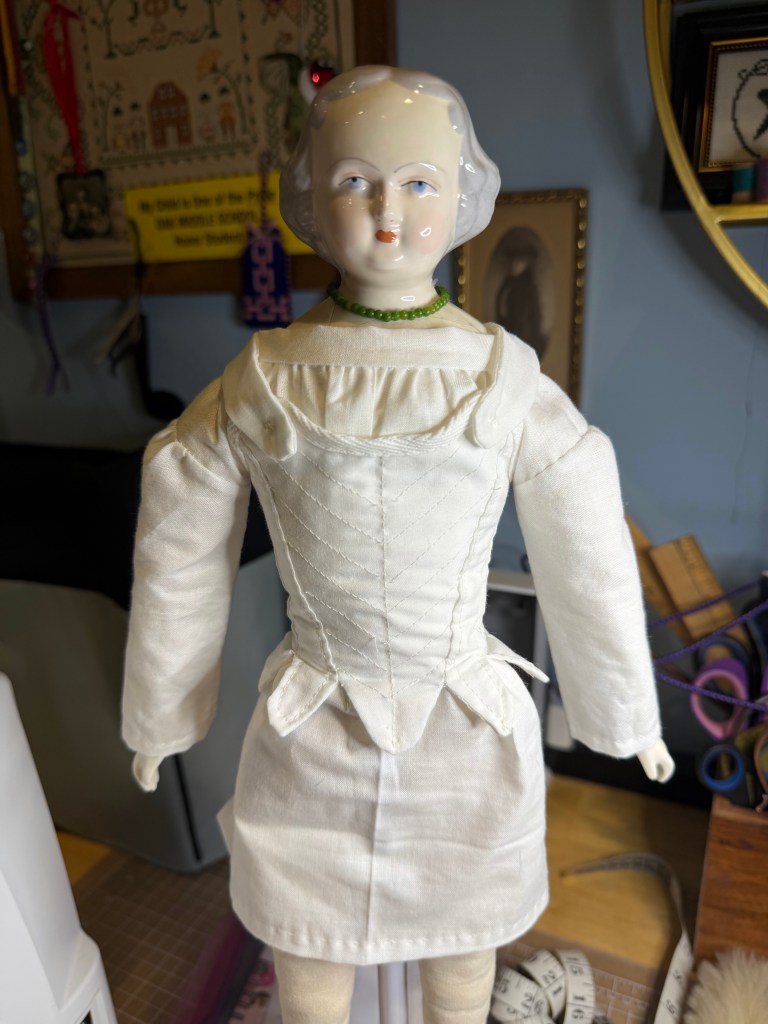
Needless to say, Martha will have a high necked dress. I will also be trying to style her in Colonial attire. That’s an era I know nothing about clothing wise, so this one will really be a learning experience for me!

I was going to dress Lady Patricia next, but I think she’s going to have to wait a bit longer!

I also need to do something about her linebacker shoulders haha.

Here Comes The Bride

When last we met, I was just about ready to make the final garment for Julia Tudor, our lovely bride in 1872. Last night, I took the last stitch. I placed a demure pin on her bodice and then draped her veil over her head.

Yes, the work table is a mess. I was so excited to be finished with this project that I could not wait to snap some pictures!

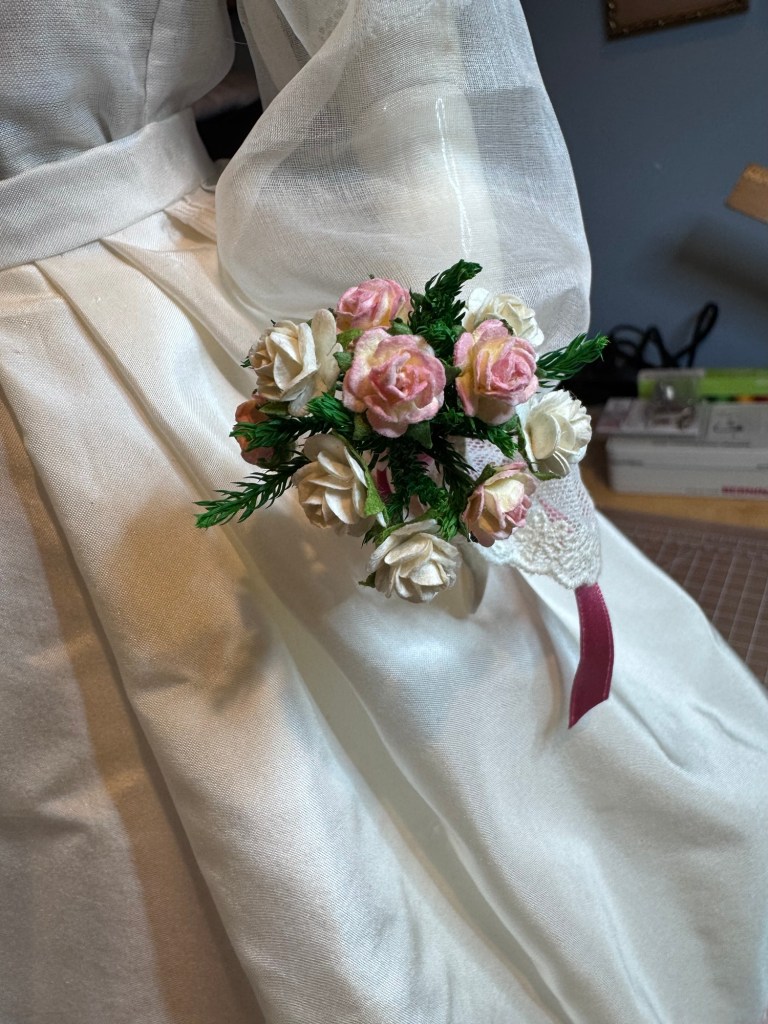
Unfortunately you cannot see the under sleeves that I made from silk organdy. They have a bishop sleeve (meaning gathered at the wrist) and then I added some gorgeous, lightweight French lace. The bouquet is made from paper flowers and is tied to her wrist with a rose pink silk ribbon. During the dress construction process, I added a seam across the part of her arm where an elbow should be, so the hand holding the bouquet is a bit easier to place.

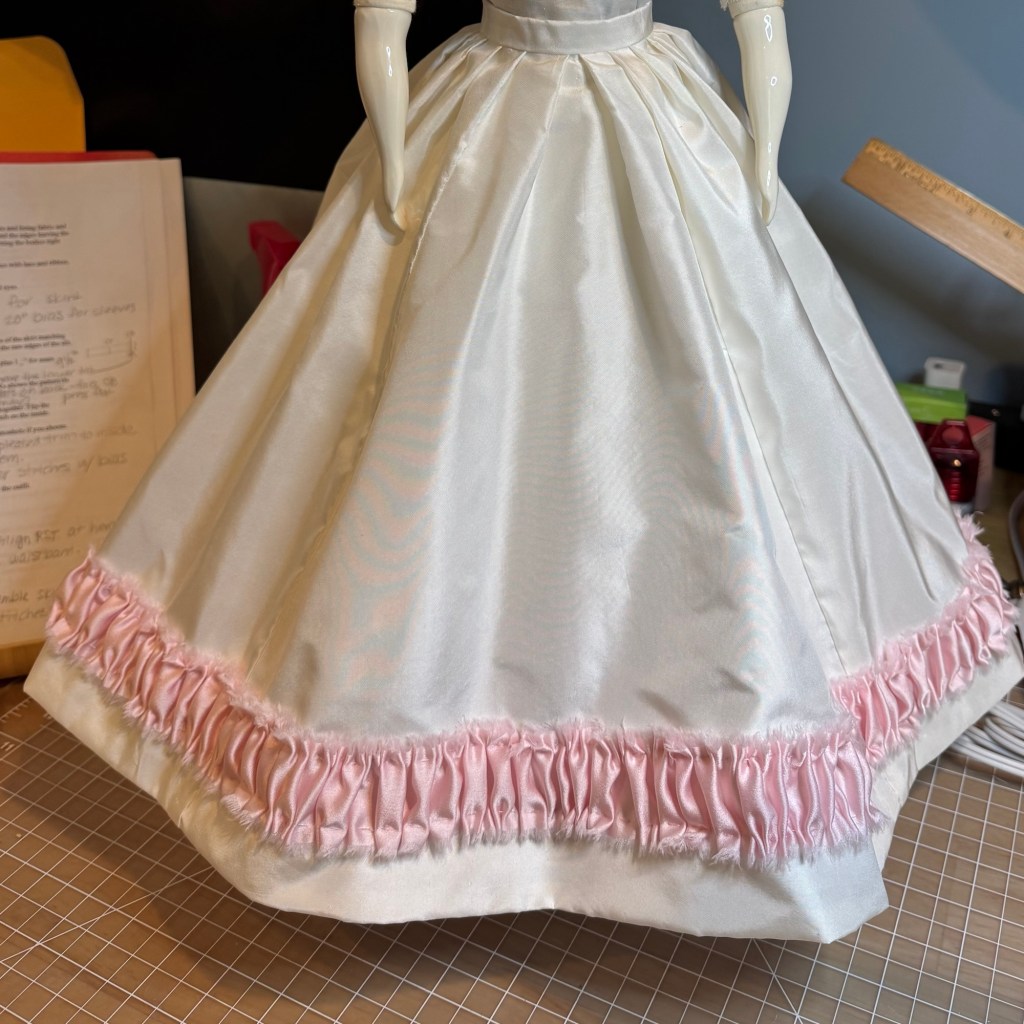
Here you can better see the trims and the bar pin. It is a vintage pin that I bought some time ago and always thought would be perfect for a pretty doll. The sleeves of the bodice are wide pagoda sleeves which allow for movement of the hands. I’m not normally a lace and ruffles person, but I felt that for this wedding dress, the more lace the better. The pink silk satin ribbon I used on the skirt is seen here. I had to cut its width by half and then fray out the cut side. That was a project in itself, but very worth it!

And here we have the butterfly basque, something today we might call a peplum or bustle. It is attached to the bodice and features the pleats that allow it to stand out. I found an image of an extant gown from 1872 with this exact basque style with the lace trim. I had to emulate it!

Screenshot

The full dress is lined with silk organza, which isn’t the best lining material, but I’d gotten too far into the project by the time I realized it. So, onward and upward I suppose!

I’m now considering what doll will be next. Julia was entirely hand sewn, but as a 20″ doll I could have used my sewing machine except for the very small bits or delicate parts. I may consider making Amelia, the bloomer suit wearing progressive from the 1850s as I found an 1850’s modeled doll kit and she will be 18-20″ when completed. My hands might appreciate the break. I can also make that outfit from a less finicky fabric like wool or a wool/cotton blend. So stay tuned and I’ll catch you up again soon!

Progress on Julia – corset cover and skirt

I haven’t made as much progress as I’d like on Julia’s wedding gown, but I did complete a couple things.

First I made a little batiste corset cover because I just know the gold silk corset could potentially show through the bodice and I don’t want that. It was a little difficult to fit to her, but right now I can’t remember why. I used French lace and mother of pearl buttons – and of course hand sewn button holes. While this pattern came from the Louise Hedrick book, it is very similar to one I made from Le Mode Illustree from 1872 or 1879.

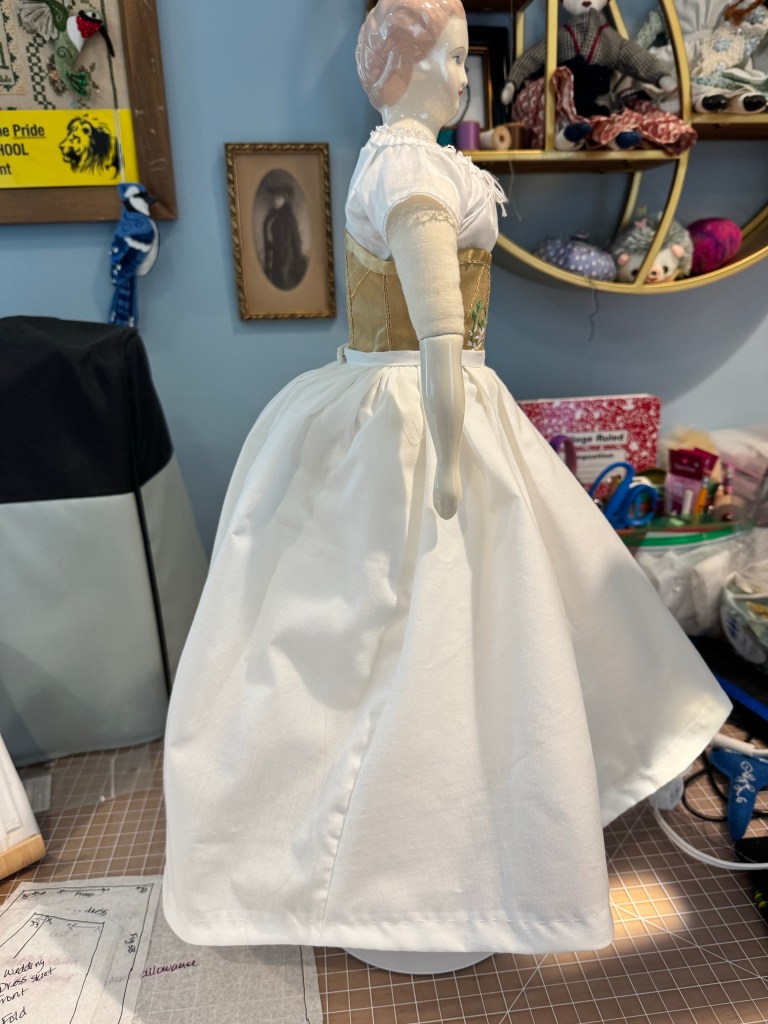
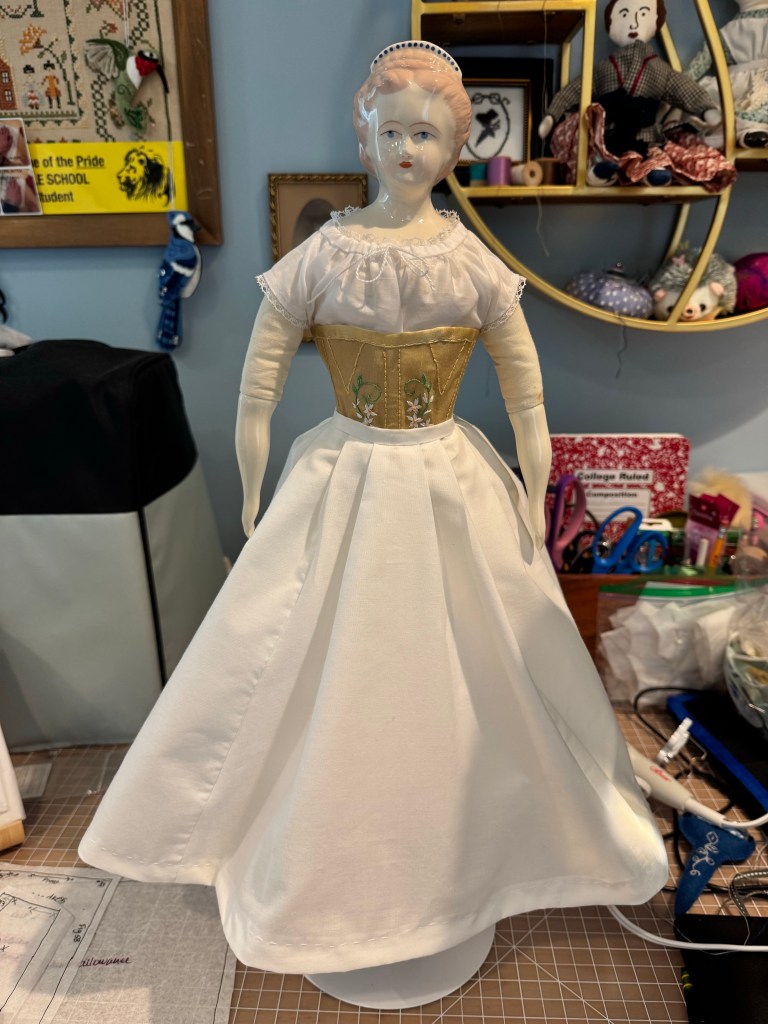
Next I completed the skirt. I actually made a test skirt in plain cotton and that is acting as an additional petticoat. The silk satin is luscious. The skirt is fully lined. I used bias strips to create the hem and the facing is just stitched to the lining.

I had this gorgeous lightweight pink silk satin ribbon and used it to create the ruched trim by running a gathering stitch on either side about 1/8” from the edge. The sweep of the skirt hem is about 36” so I used 90” of the pink to make the trim.

Next up I am working on the undersleeves. During this era, sleeves were still a separate item that was tied on around the bicep. I’m making some organdy sleeves with gorgeous French lace at the cuff edge.

After that I will make the bodice and finally a veil. But just because I have ADHD, I made a bouquet for her to hold. It is bound in a rose colored silk ribbon and I left tails long enough to tie it to her hand.

The flowers are paper and I can’t remember now where I bought them but there was a sale so I bought all the colors. :-)

Stay tuned for more progress soon. I really want to finish the glorious wedding ensemble – of course that will necessitate rearranging my display cabinet and that can always be fun too!

Better Petticoat

I talked myself off the ledge and I’m not making a wired bustle or cage for Julia. I really just don’t have the time and as I always remind myself, she is a doll. A beautiful doll, but a doll nonetheless.

Instead, I am using the small bum roll I previously made, the petticoat I didn’t love, a second petticoat I made a bit longer than the first, and finally a petticoat made from the skirt pattern.

I think this gives the posterior enough fullness to achieve the look of 1872, while also giving me experience with the skirt pattern.

One thing I discovered from this exercise is that the pattern does not tell you what to do with the side-to-back fullness at the waist. And, the pleats in the front do not take up enough fabric to evenly distribute the front between the two sides.

Now, luckily, I have made human sized clothes with these same design elements but better instructions!

I added two pleats on either side of center front. This serves to take up enough fabric that the side panels of the skirt are actually on her sides. They were previously more to her back.

Second, I used 1/4” pleats on the back and then pressed them toward the center back. These are similar to cartridge pleating except the pleats are pressed toward the back, where cartridge pleats would hang from the waistband. Anyway, that’s what I did.

I used bias tape to create the hem because it is curved. You can see the nice train the finished wedding dress will have. I suppose I will start on the bodice mockup next but probably with paper towels.

Better Petticoat

I talked myself off the ledge and I’m not making a wired bustle or cage for Julia. I really just don’t have the time and as I always remind myself, she is a doll. A beautiful doll, but a doll nonetheless.

Instead, I am using the small bum roll I previously made, the petticoat I didn’t love, a second petticoat I made a bit longer than the first, and finally a petticoat made from the skirt pattern.

I think this gives the posterior enough fullness to achieve the look of 1872, while also giving me experience with the skirt pattern.

One thing I discovered from this exercise is that the pattern does not tell you what to do with the side-to-back fullness at the waist. And, the pleats in the front do not take up enough fabric to evenly distribute the front between the two sides.

Now, luckily, I have made human sized clothes with these same design elements but better instructions!

I added two pleats on either side of center front. This serves to take up enough fabric that the side panels of the skirt are actually on her sides. They were previously more to her back.

Second, I used 1/4” pleats on the back and then pressed them toward the center back. These are similar to cartridge pleating except the pleats are pressed toward the back, where cartridge pleats would hang from the waistband. Anyway, that’s what I did.

I used bias tape to create the hem because it is curved. You can see the nice train the finished wedding dress will have. I suppose I will start on the bodice mockup next but probably with paper towels.

Oops I was incorrect

I recently shared that I need to make an elliptical hoop for Julia. I really procrastinated on this, partly because it seemed like a lot of work. But also because in the back of my mind, it didn’t seem correct.

With all the fashion changes in the 19th century, why would an elliptical hoop stay in use from 1865 to 1872? It just didn’t make sense.

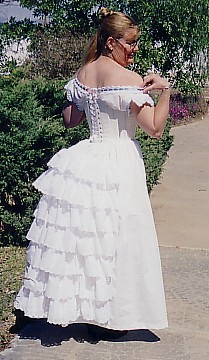
I’m glad I didn’t dive into that project, because after doing a bit more research and asking people more knowledgeable than me, I discovered the shape I am looking for is somewhat in between the older hoop and the not-yet invented bustle.

Wow. That is very different.

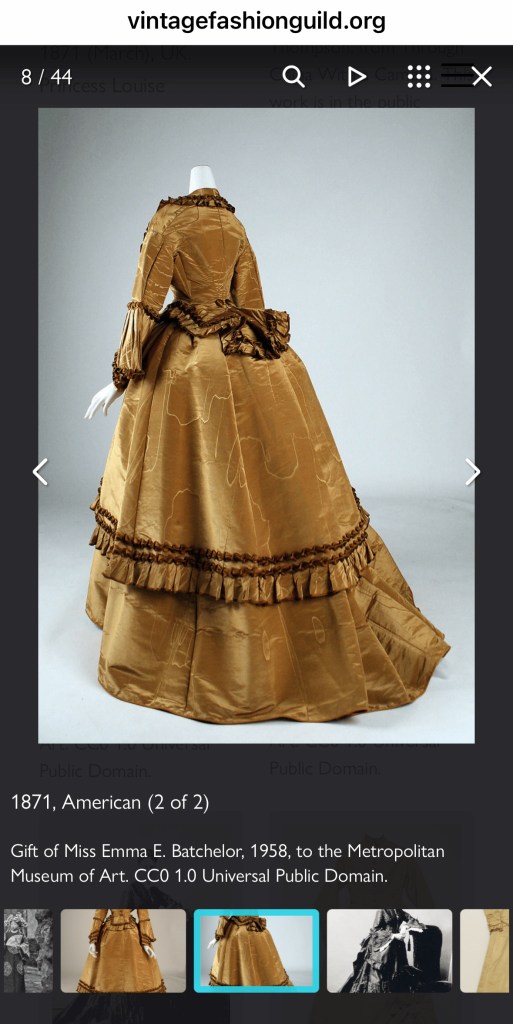
Here is an extant wedding dress from 1871 that better shows the shape achieved.

So I’m really thankful again that I didn’t start making that hoop! But now I need to figure out how to make those wire channel pocket thingies.

It was suggested I design the garment after the Truly Victorian TV108 Grand Bustle, although that seems like the next fashion era to me.

Then there is the Truly Victorian TV101 Petticoat with Wire Bustle, which again feels later to me.

I must continually remind myself this is for a 20” doll. No one would even blink if I made no bustle garment at all!!

Second Thoughts

Do you ever have a lot of time to look at and consider the garments you have made for your treasured doll and begin to have second thoughts? I am in that mode right now.

Recently I have been in some required down-time so I’ve been off my sewing project for a couple weeks. As I’ve looked at the photos of Julia’s empire hoop and petticoat, I am just not thrilled with either one of them. I didn’t like the empire hoop when I made it for Caroline, although it went with all the other garments I made for her and somehow that compensated for the shortcomings.

Each time I look at Julia in her empire hoop, it just looks…..meh. Now, certainly, I am adapting this pattern which was designed for French Fashion Dolls with composite bodies, and not one with a cloth body. I had thought the height of Julia would allow for the empire hoop to hang nicely after being slightly sized up for her waist.

I was wrong.

I just do not love it.

And I think partly because the French Fashion Doll look is that of a young lady, not a girl doll, but not quite a lady doll, and certainly not one getting married. Having worn reproduction clothing from the era, I know how the many layers of fabric feel and drape on the body. I also know what wearing a wedding dress made me feel and I don’t think Julia is “feeling” like a queen yet. Even just wearing the undergarments to my wedding dress made me feel elevated and elegant.

The elliptical hoop which is needed for the 1872 dress silhouette looks like it’s going to be easy, but it might be a trick.

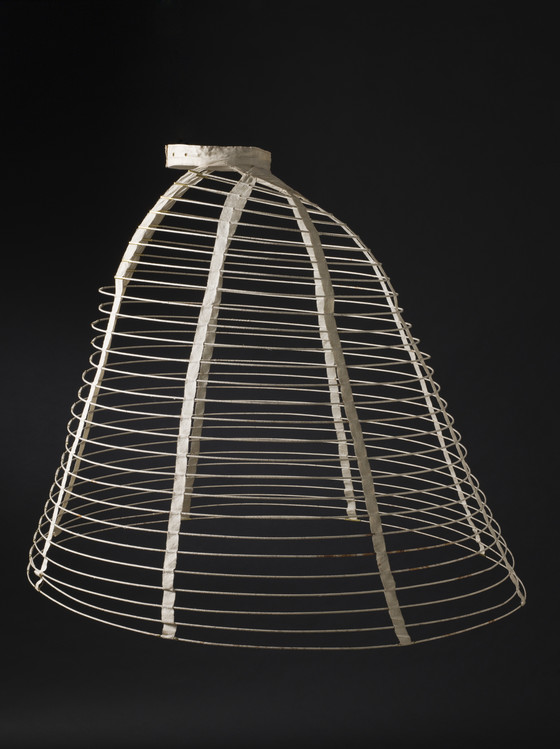
This is an extant elliptical hoop, image courtesy of LACMA. All those horizontal lines are wires/bones, and the various vertical tapes keep them in the desired shape. Now, since I am making this for a doll, I do not need to add 25 or so horizontal bones. I might do 10.

I found a lovely site called Tea In A Teacup that goes into a detailed recreation of this style of hoop and I believe I can adapt that to the 20″ doll I am working with here. Once I get that completed, I’ll be able to make a new petticoat.

This petticoat is lovely, no question, but it doesn’t feel “wedding” to me. It’s ok because it will go into the clothes closet I have been accumulating for dolls through my various projects and remakes. I suspect I will again make a ruffled petticoat, but the next one will have a slightly different shape. This one just feels small. I will adapt my learnings from this petticoat and utilize them for the next one, which will be more like the cut of the skirt of the wedding dress. I’d always heard that to make a petticoat, just use the skirt pattern in a lightweight cotton.

So there you have it, my second thoughts on this and plans to make it better. Once I have those two items completed, I can decide whether to make a corset cover or not. I kinda don’t want to, but at the same time, I’m nervous to start on the dress. :-) And that of course will have mock ups galore, I’m sure!

Foundation garments

Busy, busy fingers. I have been working diligently on Julia’s foundation garments. In my last post I shared the completed chemise, drawers and corset. Today I will share the next items.

First up, I completed the empire hoop. This is the second time I’ve made this particular item and I’m less than delighted with both of them.

Side view
Back view

I feel like the hoop is meant to support a smaller skirt than Julia will likely be wearing. We shall see. The first time I made the empire hoop, I discovered the instructions didn’t tell you to hem it! Obviously I remembered that this time and added a sweet gathered lace.

I don’t love how the back just seems to collapse instead of standing out, but maybe I’m picturing the wrong thing. A grand bustle hoop would stand far out and that’s not the silhouette I’m going for here.

To compensate for the uninspired shape, I’m making a small crescent shaped cushion bustle. More like a bum roll. I saw this on a vintage recreation of an elliptical hoop and I think it’s going to provide the shape and lift/support I’m looking for here.

Vintage buttons

I do love these buttons. They are vintage glass buttons and yes, I did handsew the button holes.

I’ve considered making a different elliptical hoop based on original garments, but what a massive amount of work that will be. Talk me off the ledge!

Bummer

Later…

I’ve made the crescent shaped bum pad and I don’t love it, either! It’s possibly too full and stands out too straight of an angle from her body.

Bumper pad

If I try to flatten it down it has a better profile, but even that isn’t realistic to maintain. I also tried putting it under the empire hoop but that just threw off the way that garment hung and fit, so that was a no-go. This is just going to be set aside for the time being.

I had made the bum pad while waiting for some laces to be delivered for the petticoat.

Lacy petticoat

Here you can see the petticoat, which I do rather like. It is about 1.5” shorter than the hoop and I don’t think that is correct even though it exactly matches the measurements in the book. Le sigh.

I’m just going to focus on what I like. I like the tucks. I like the lace insertion. I like the ruffled hem.

Pretty petti, ugly hoop

At the center back are two itsy worked eyelets for the drawstring. I’m rather good at eyelets. I really should be great at buttonholes because they are just elongated eyelets, right?

The drawstring waist allows me to draw more of the fabric to the back of Julia’s body. This is perfect for the 1872 profile I am hoping to accomplish here.

Part of Julia’s issue is that she is sort of potato shaped through the body. I can’t make much of a waist on her, even with the corset. It’s not a big deal because she is a doll afterall. I just want her to be a beautiful bride once finished with the project!

Bride To Be, Julia

I started working on the new garments for Julia Tudor, who will be getting married in 1872. Based on the lovely drawing in the 1872 La Mode Illustree, she will be wearing an ivory silk satin with blush silk trimming, French lace undersleeves, and a bobinet veil.

Of course before she can don her bridal finery, she must have the appropriate undergarments. I have completed the following so far.

A fine batiste chemise with delicate lace on the neck and arm openings.

Delicate batiste drawers featuring tucks, hem lace and white embroidery in a tulip stitch.

Please ignore the messy work table!

A gold silk taffeta corset, boned and fully lined, featuring orange blossoms embroidered on the front.

Orange blossoms for good fortune
Back view showing lacing

Still to be finished are a practical corset cover of crisp cotton, a luscious petticoat featuring tucks, insertion and also lace at the hem, and an empire hoop of cotton/linen blend. I will share more as they come!

2025 Project Goals

I have a number of things I want to work on this year now Ruby is completed.

Julia Tudor

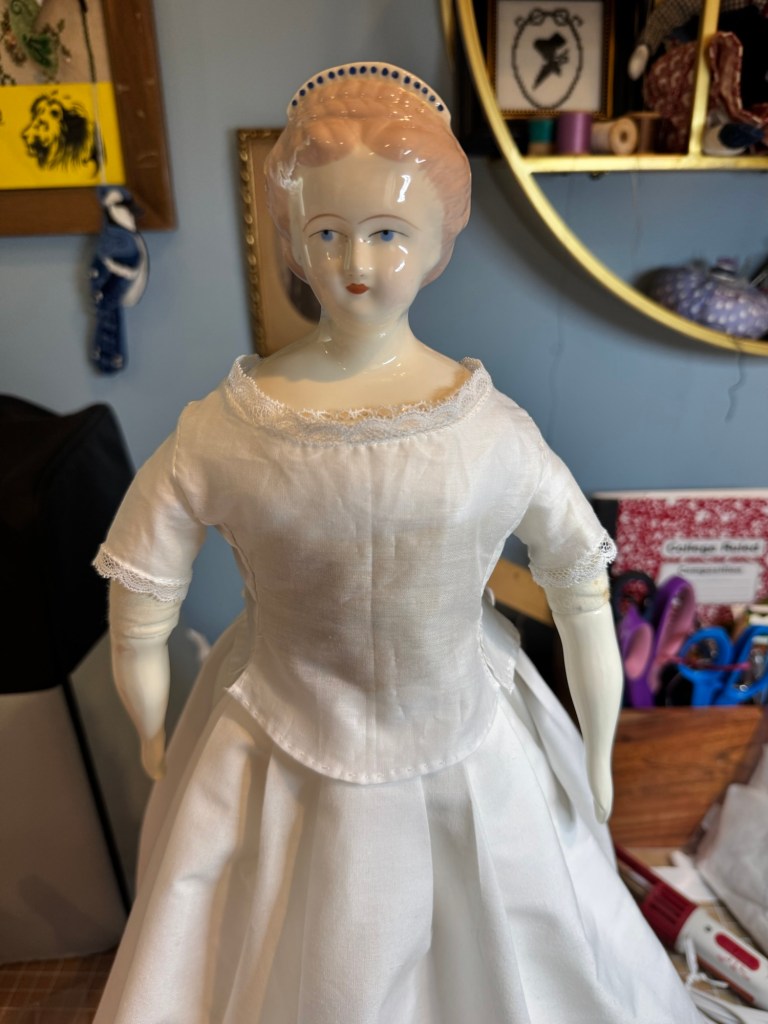
This doll is about 20” tall and will make a lovely bride. She has a tiara on her head and I am trying to figure out how to make a veil stay in place. My vision is an 1872 wedding dress in ivory and blush pink. Or it could be blush pink with ivory, I haven’t finalized that yet. I’m drafting the pattern from the 1872 La Mode Illustree’ and so far there is only one confusing bit.

Preparing for her upcoming matrimony

Amelia

I’d like to make an 1850s styled doll and give her a Bloomer Suit. This fashion was popularized by Amelia Bloomer, hence the name. I’m undecided if I will use a china headed doll or make a cloth lady doll for this. 1850s heads are rare and expensive. If I decide to make a cloth lady doll, I will try a Susan Sirkis method for attaching hair.

Could be interesting!

Amy Tudor

It’s a stretch goal for me but I would like to make this pretty bonnet head doll. I only have the head so I’ll need to decide if I will purchase china arms and legs or make fabric ones. Bonnet head dolls are based on 1840s styles even though they were produced around 1910 apparently. I’d like to dip into this time period though as I know nothing about it.

I’d like hands and feet, please

Minerva

This beautiful doll doesn’t need much but a repair to her broken foot. I had an idea that I could make boots and stockings, fill them with emery or something similar, then fit them to the broken china on her foot, pull up the stockings to hide the transition. We shall see. I got this idea from Ruby actually since she has her own boots and stockings.

My foot hurts!

Charlotte

I just acquired a 3” tall frozen Charlotte doll. Of course she’s nude. Clothing her will be a challenge due to her itty bitty size so that could be a fun little project. I have some ideas based on other frozen Charlottes with clothing I have seen.

Brr it’s so cold I’m frozen!

So there you have it – my ambitious goals for the year. Of course I’ll be posting here with my progress. And no, I haven’t forgotten the various other dolls I have to work on, they just might need to wait until 2026 lol.

Did you know I have an Instagram where I post lots of interim photos of my work? Look for me under norkio and follow for progress shots and other fun stuff.