Adventures in Petticoats

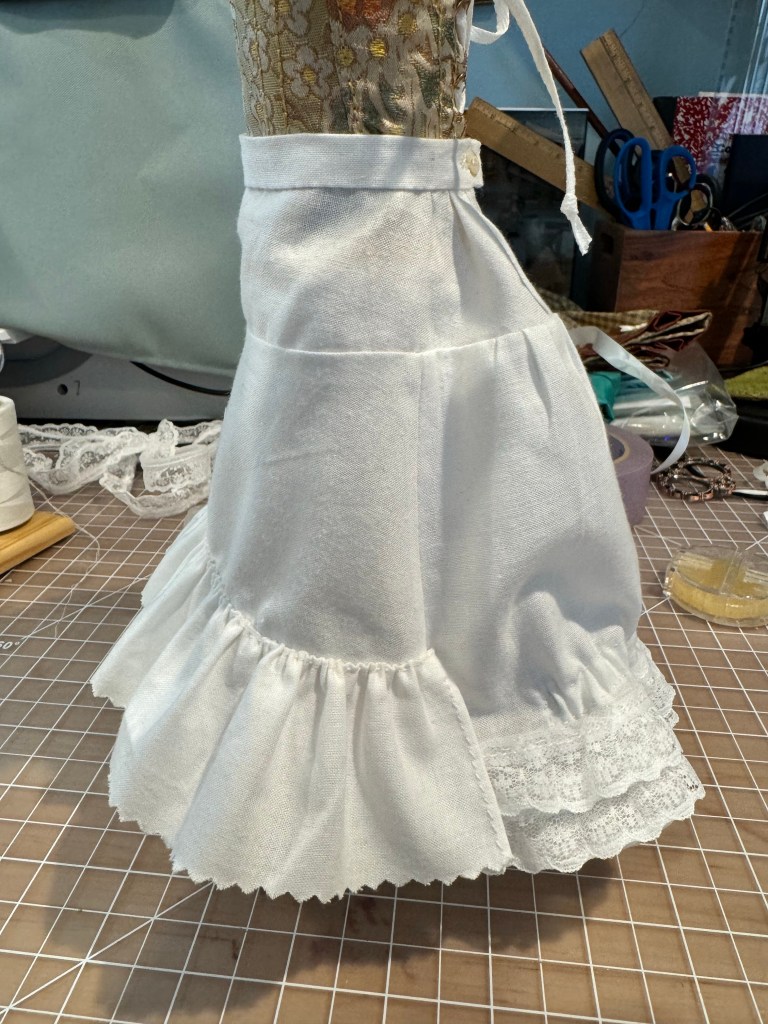
I’ve started working on Ruby’s next undergarment, which is a petticoat.

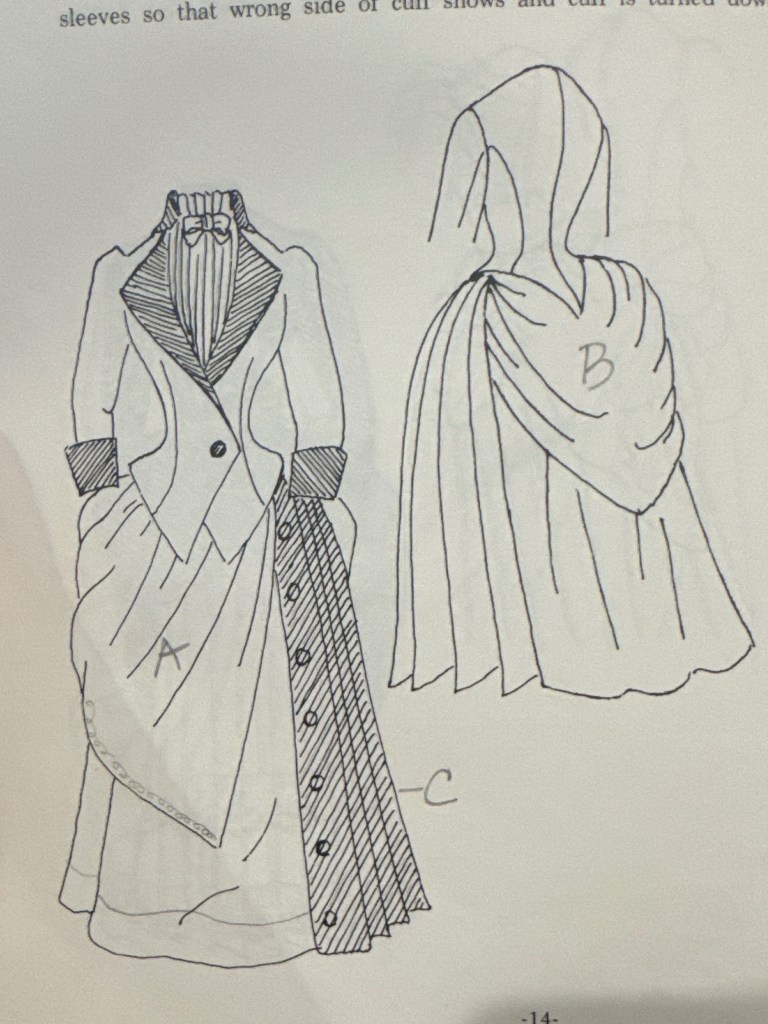
After upsizing the pattern a bit to fit her, I carefully read the instructions. The drawing is a smidge deceptive!

The pattern piece just looks like a typical skirt piece. But, the pleated front trim and ruffled back are added on top of the base piece. I thought I was going to be making a separate hem piece to add to the lower edge of the petticoat. Frankly I’m relieved as adding it to the base is a lot easier.

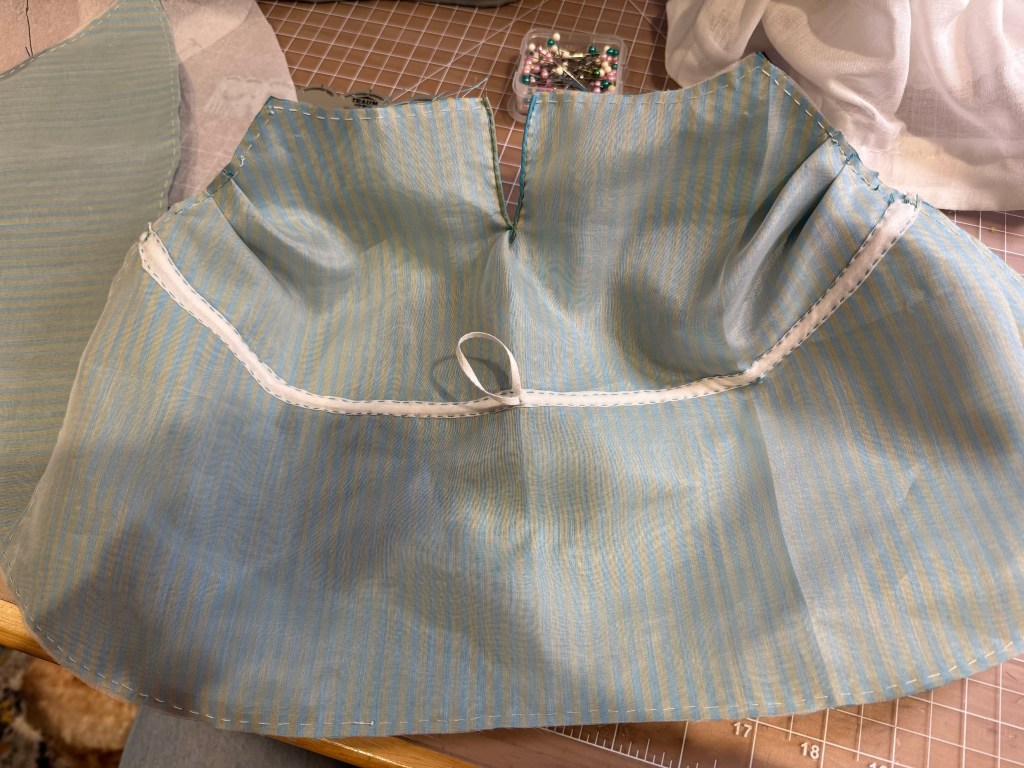
I’m using a lightweight linen for the petticoat, bias tape for the casings and 1/8” twill tape for the inner tapes. Once assembled, the inner tapes can be drawn up and tied to create a nice pouf on the derrière.

The tapes are sewn to the inside of the piece so the outside is nice and tidy. However, it’s the end of the day and I sewed one side correctly and the other incorrectly. Urg. I will pick it up again another day!

Doll Corsetry, Part Two

I’m coming to realize that the dolls I sew for are FAR better dressed than I have ever been or ever will be. You have seen the chemise and fussy drawers that Ruby is now enjoying. Lovely soft cotton voile with silken trims and lace. Ooh la la.

The next garment I have made for Ruby is really, if I don’t say so myself, amazing. Just because a lady is 130 odd years old does not mean she wants any old clothing, am I right? So, Ruby and I talked – it was a bit one sided if you must know – and she told me how she has always wanted a decadent silk brocade corset.

And how could I say no to that?? For my own reenacting adventures, I have a lovely coutil corset with fancy lace trim. I know how it makes ME feel, so yes, Ruby would like to feel fancy too. No doubt!

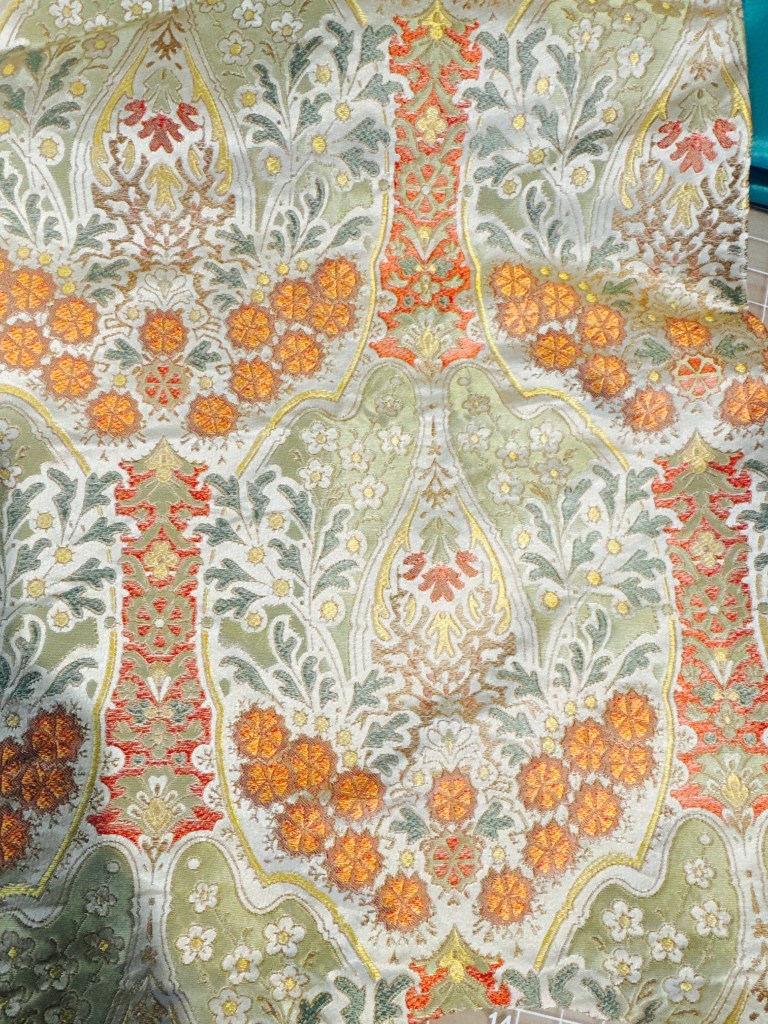
I looked into my silks and found “just the thing” for this project. It’s a gorgeous silk brocade in autumn colors. I particularly like the rust-colored flowers and green botanicals.

Caroline was kind enough to lend her corset to Ruby to try on, and it is a good fit. I pulled out the pattern I drafted for Caroline which was drawn from the book —- A French Fashion Doll’s Wardrobe by Louise Hedrick. When I made the corset for Caroline I followed the instructions but I had been a bit surprised the garment was only a single layer of fabric.

This time I decided to make it with a cotton lining, more similar to how IRL corsets are constructed. To complete this, I cut each piece in the silk brocade and also in white cotton. The two layers are stitched separately, then placed right sides together to stitch the center back seam. The piece was then turned right side out for the top stitching that creates some of the structure and also the boning channels.

I realized as I was creating this garment for Ruby that I made a slight error on Caroline’s. It doesn’t impact the actual item so I won’t change it.

The top stitching is done in a golden wheat colored silk thread, doubled. The back stitch adds an attractive detail and has the duel purpose of binding the two layers securely. It’s like the pieces are quilted together.

There are five bones in the corset – center front, one on each side of center back, and one each angled on the side front. If you decide to undertake this project I recommend angling the ends of the side front bones so they fit neatly into the channel.

The last couple steps are adding the grommets and binding the edges. I happened to have this silk ribbon that perfectly matches the thread I’ve been using. And I love that the brass grommets work perfectly with the fabric.

Et voila! Ruby looks lovely in her new, fancy corset!

On with this project! I need more clothes!

Some Fiddly Drawers

I’ve finally dedicated some time to work on Ruby’s drawers and they were so fussy and fiddly! I decided to use the Susan Sirkis Wish Booklet WB 23 Fashions 1880-1885.

The Wish Booklets are wonderful with lots of patterns that are relatively easy to follow…if you understand garment construction and have some knowledge of period techniques. The original chemise I made was based on a different pattern because I wanted something closer to what is shown in the Bloomingdale’s Illustrated 1886.

The drawers however are a sweet design and just fine for Ruby.

Many of the reproduction doll patterns I have seen and used include some errors, omissions and sometimes just confusing instructions. I remind myself they are written by humans (fallible as we may be) and rely on my sewing experience to fill in any gaps. In these drawers for example, there is no instruction to hem them or to add the lace trim.

Should you wish to make these drawers, I suggest you make a rolled hem before starting, and then make your pin tucks, or adjust the placement of your pin tucks up a quarter inch so you have space to hem and add the lace at the end.

Also, there’s no mention of added the bows shown in the drawing but that could be put down to it just being a suggestion. I liked the look and added silk ribbon bows.

I also chose to use French seams since voile can fray just as badly as silk! Being such a fine fabric it is very delicate, but gives such a lovely result. Another step not really mentioned is the waistband. While the instructions do indicate the yoke should be set to a narrow waistband, there is no mention to add ease stitching since the yoke has bias edges. Again, not too difficult to figure out.

They fit Ruby nicely and I closed them with a hook and thread bar. I think a button would add unnecessary bulk.

Ruby is pleased to have drawers again!

Ruby’s Body & First Garment

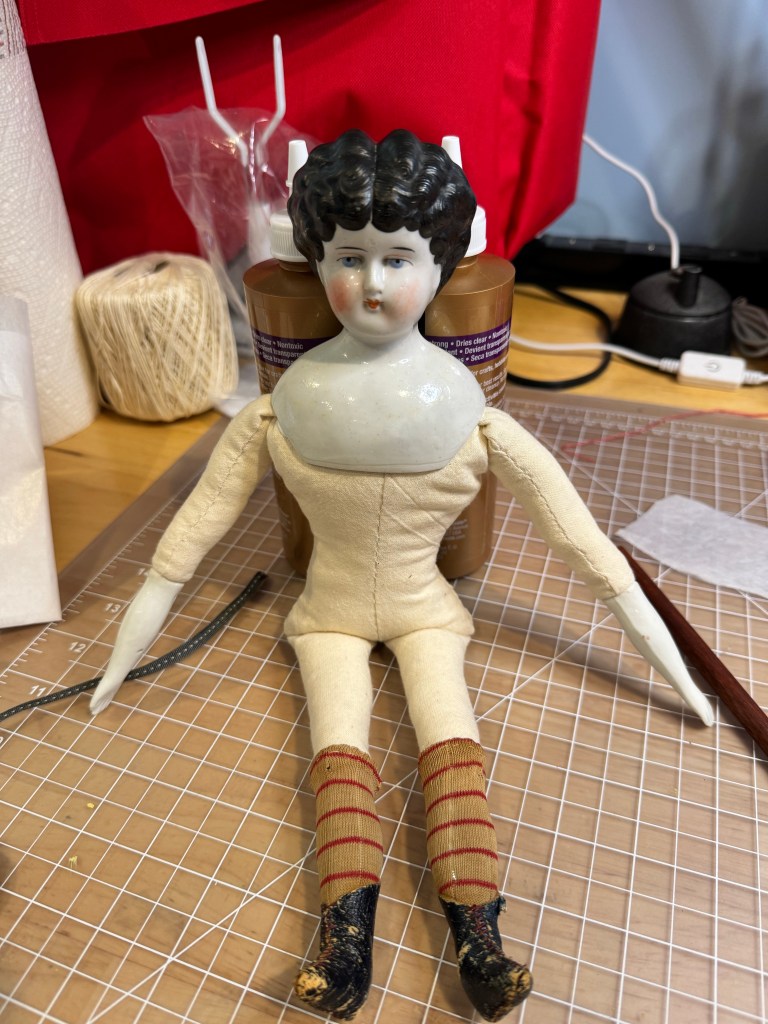
I’m tickled that I can share with you the new body created for Ruby. I was very happy to save her original stockings and shoes!

Ta-da!

I’m tempted to open her up and add some more stuffing to make her body more firm. The more I work with her the softer the cotton stuffing becomes. She has been filled with 100% organic cotton.

Her head was glued with Aileen’s tacky glue. I hope it holds for as long as the original glue did. For that matter I would be thrilled if her new body lasts as long as her original did!

My name is…

I also created her first piece of clothing. It’s a sweet chemise of the softest 100% cotton voile. The lace is also 100% cotton from my favorite heirloom sewing site Farmhouse Fabrics. The button is a vintage mother of pearl with the 2-hole “eye” look.

Ah, new clothes

I looked at the Bloomingdale’s Illustrated catalog for design inspiration. The placket front was very popular in 1886.

Next I will move on to some drawers and a petticoat. See you again soon!

Ruby Restoration

I am finally starting the restoration of a doll that belongs to my cousin M. This doll belonged to her great, great grandmother and is named for her.

POV when you need a spa day

When I received Ruby she was not in good shape. Or I should say, her body was not in good shape. Her porcelain parts are in excellent condition for being around 130 years old. Over the years though, her original body developed some tears and the sawdust stuffing was beginning to leak. One of the prior owners encased her entire body in a second layer of fabric. The mending job made her look a bit like Coraline. In a further insult, someone patched that with packing tape.

As I deconstructed her I realized that the original issue must have arisen because her head was pulling away from the body. Her chest plate does not have the holes for stitching the head on so it was glued. The glue held all these years but the body muslin tore away from the chest plate, allowing fine sawdust to escape.

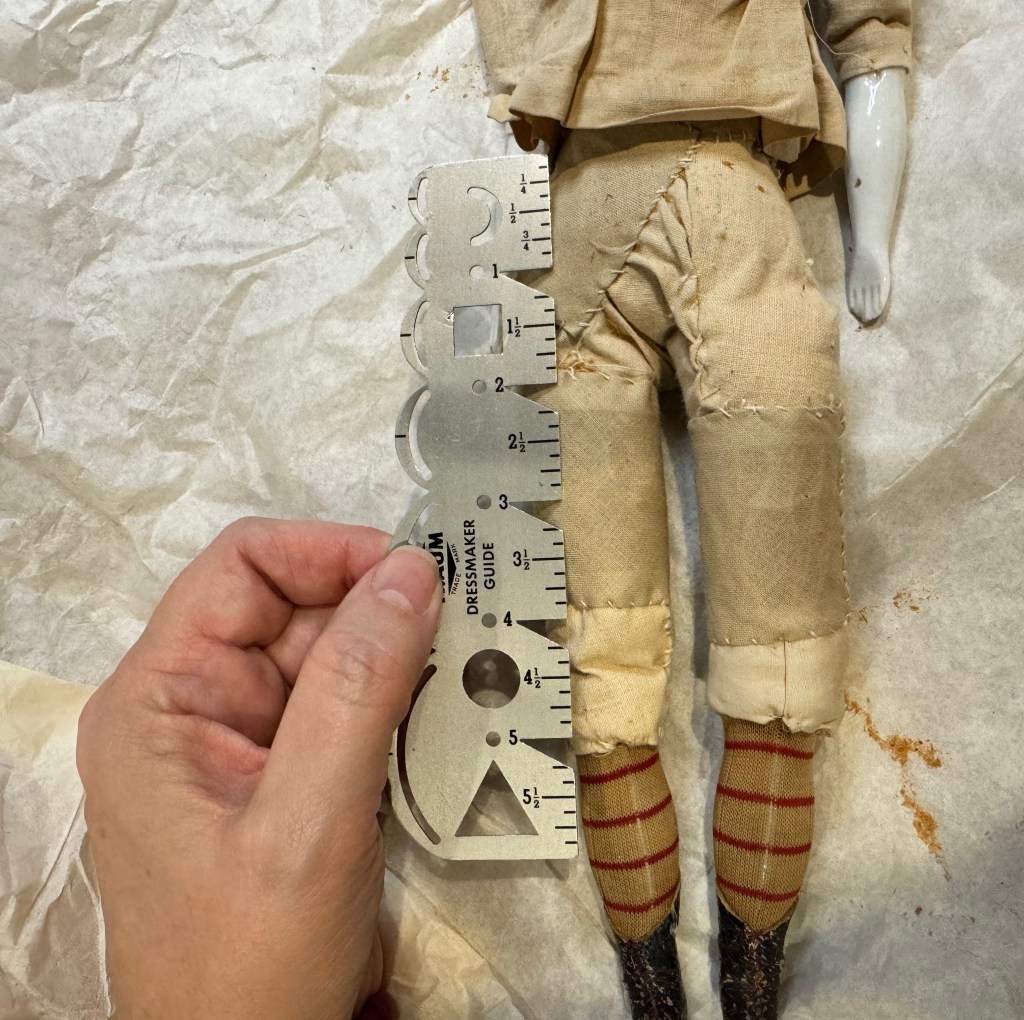
Careful snipping of stitches revealed that the “shirt” on her torso was probably her original chemise! In the photo above, it is stitched to her body at the waist but that waist is really closer to the original shoulder of her body! It added almost 2” to her height.

Documentation

I had carefully measured and documented her body before beginning the deconstruction. These measurements will be very helpful as I start to build a body for her.

I discovered her original body was a dusty rose brown color! It may have darkened over time due to the sawdust but typically we see white or off white bodies so that was interesting.

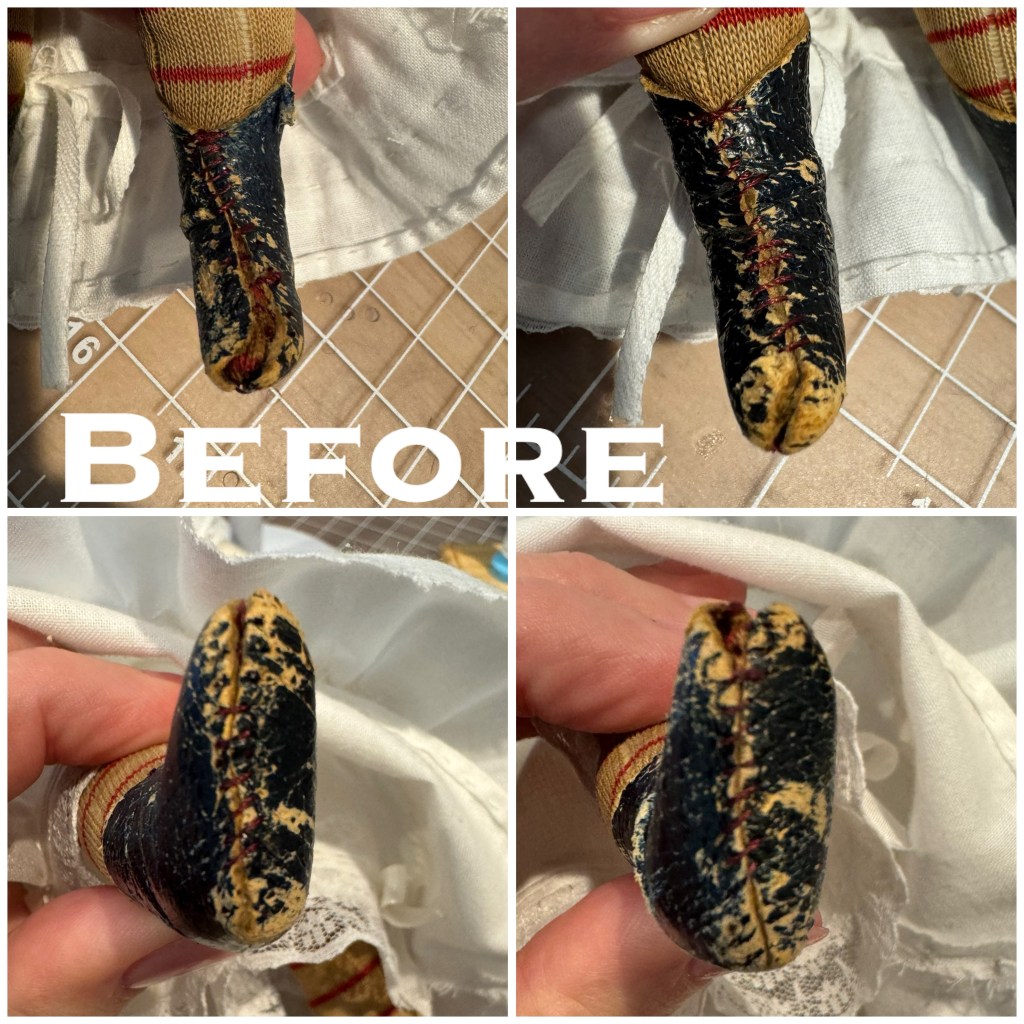
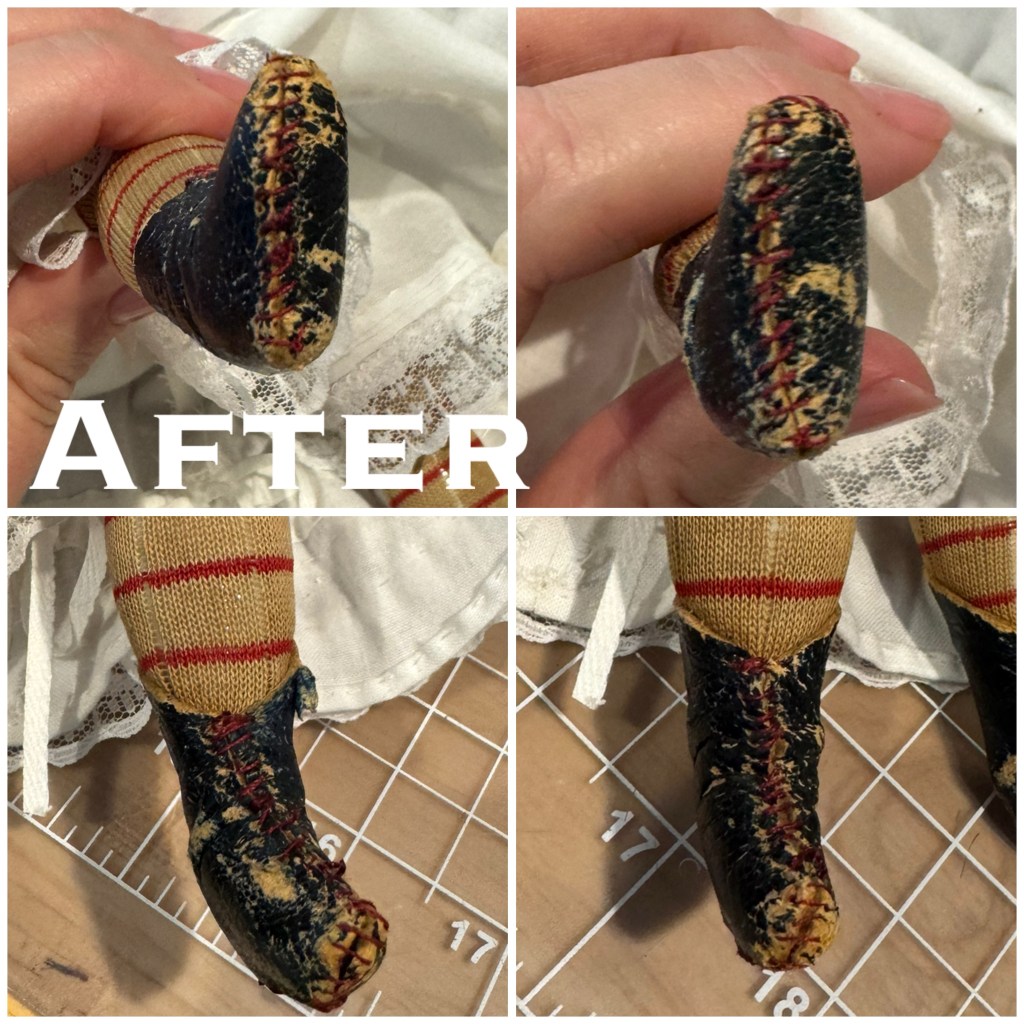
Also a treasure to keep are the stockings and boots. A prior owner made these items. The boots were made from the fingers of a glove. I was able to very carefully clip the stitches binding the stockings to the “cover body” and used tweezers to pick those stitches.

Planning

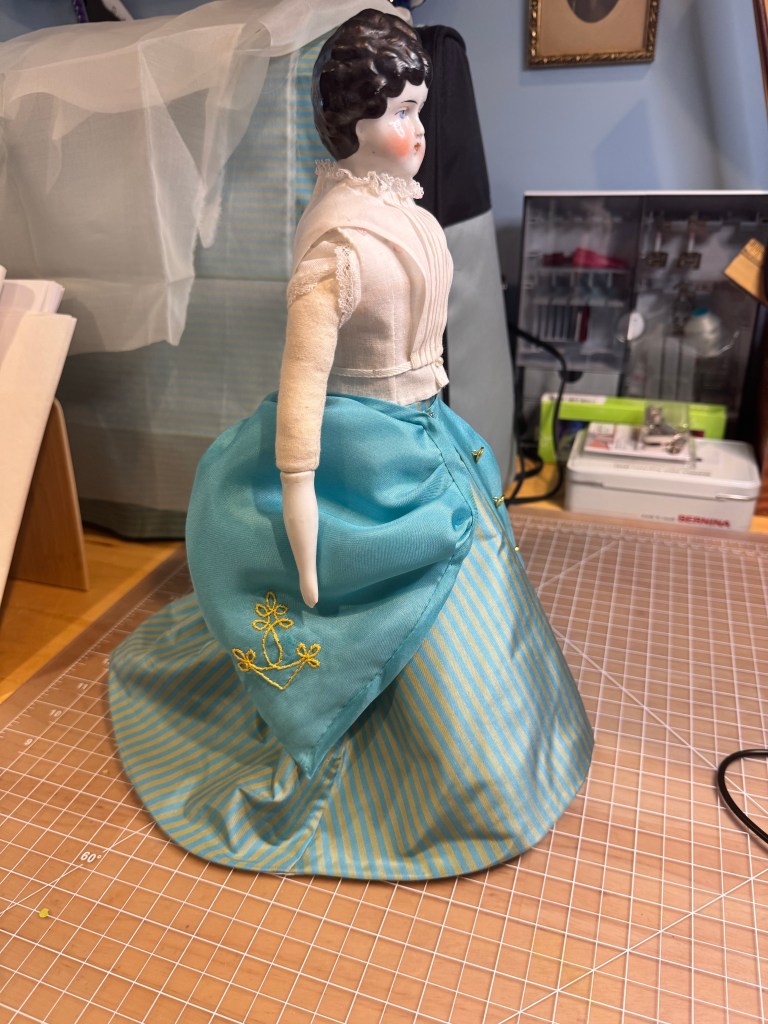
I’m about ready to start building her – the easy part! I do have fabrics selected for her dress and I will share as that comes, but I will need to finalize the dress design first. I’m planning for an 1886-ish dress as the original Ruby would have been 8 that year. She might have received this doll as a gift and made her clothing. Bustles were the main style shown in the Bloomingdale’s catalog for 1886 so if that’s what we decide it will be another fun challenge for me.

I hope you will join me on the journey as we restore Ruby.

An 1860 style doll quilt

Here’s a project I had to hold onto before sharing because it was made as a Christmas gift.

Block quilt

I followed a basic tutorial which guided me on how to press the seams inside – necessary since this is the first “proper” quilt I have made. I just noodled the previous doll quilt I made.

The pattern is based on antique doll quilt patterns from the 1860s and I also used reproduction fabrics. The quilt top is assembled from blocks of four. It’s important to stay organized. I see where I made a couple mistakes but I bet you don’t.

Quilt back

The quilt is 100% hand sewn, as would have been done by a young lady making a quilt for her dolls in times gone by. It’s interlined with a piece of flannel to give it some body.

The finished quilt is about 16 x 20 inches. Dottie and her friends will be quite comfortable with this quilt to keep them cozy. This is the kind of quilt I used to get lost in, just dreaming about the people who used it before me.

Dora’s Rebirth

You may (or may not) remember I mentioned last year some time that I have a doll who I specifically acquired to make a new body for – in anticipation of repairing my cousin’s doll Ruby.

Poor little Dora

This sweet Dora Tudor doll was badly damaged. Her entire body was spotted with what looked like mold. Yuck.

Ouchie

She has a broken arm.

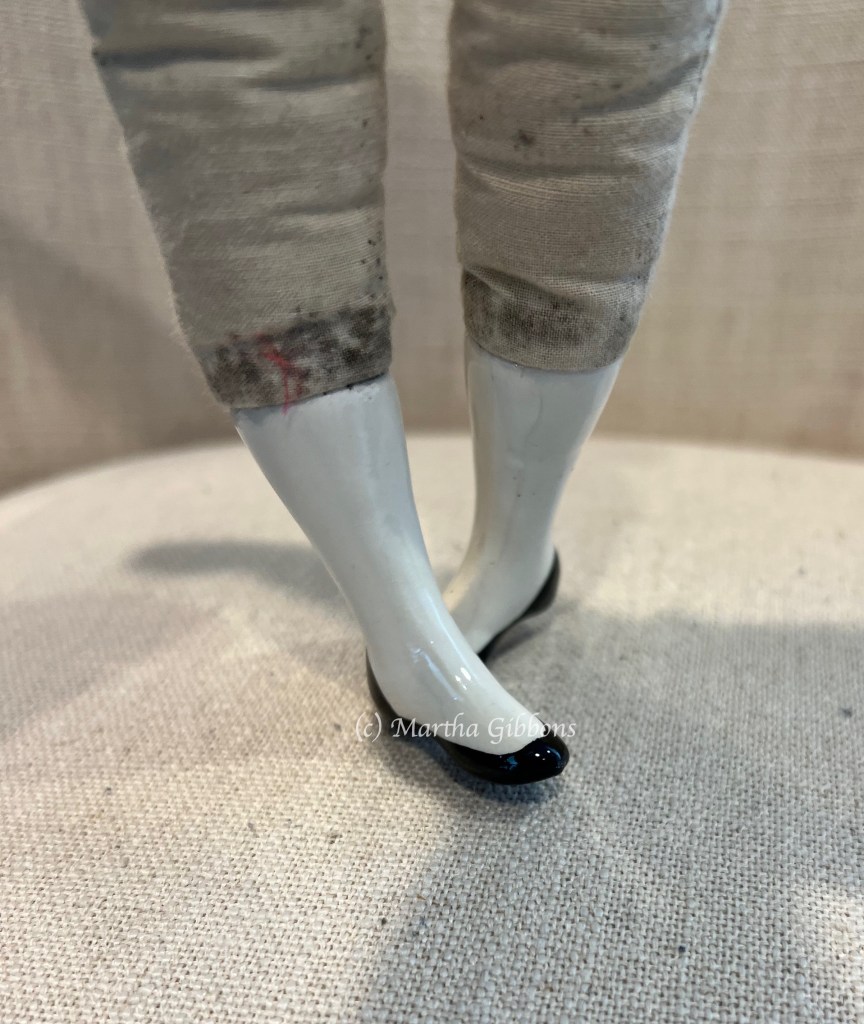
Pigeon toes

Her feet are both cockeyed and the tips are chipped.

This past week I deconstructed her to start over. I felt in the spirit of her becoming a new doll she should have a new name.

Hi, I’m Edna!

Edna was filled with some kind of foam rubber stuff that was breaking down badly. Along with the mold I felt it necessary to just dispose of her former cloth parts.

New arms

I’ve drafted a new body pattern and made the arms. I thought I’d make her a bandage for her broken arm. Perhaps we can come up with a plausible Victorian injury. Let me know your ideas. :-)

Next time I will have her legs and maybe even her body, but for now I have to go clean my house, boo.

A pretty side project

The next bird in the Squishy Cute line that I made recently is this beautiful hummingbird.

My mother really liked it and it was pretty simple to make, so double win. If you decide to try some of the Squishy Cute patterns, I recommend tracing the pieces onto the felt rather than pinning. For dark colored felt use chalk. This particular one calls for a black sequin and a seed bead but I didn’t have a black sequin. I used a black button.

Find them on Etsy here. They have more than birds, too.

Doll Hat Boxes

I threatened you with a tutorial on how to make these cute $2 craft boxes into hat boxes for your dolls, and here it is!

Naked boxes

To make these specific hat boxes (also called band boxes) you will need 1 larger sized piece of fancy wrapping paper – 18×24 is plenty. The reason for this is the outside measurement is greater than 12” which is the standard large size you will find at your local big box store. Original Victorian hat boxes came in many different shapes and sizes, but the ones we are most familiar with today are the round variety. I found reference to an enterprising young woman who created beautiful boxes covered with wallpaper so I tried to find papers that looked a bit like doll-sized wallpaper. Unfortunately I lost track of the website where I read this and can’t give you more detail.

If you are looking for a source of large format paper, you might be interested in the site Mulberry Paper and More. It’s a bit overwhelming at first, but they have an amazing selection of papers that would be perfect for this use case. This tutorial is being shown with Japanese Chiyogami Yuzen paper. I’m visual so there will be a lot of pictures to illustrate this project.

Supplies

You will need:

Tape measure

Pencil

Scissors or exacto knife

15” ruler

Sewing ruler for small, precision measurements

Craft glue

Paper towels

Craft paper

Measure your box carefully. Allow for overlaps and edges! These boxes from Dollar Tree are 3 5/8” diameter on the lower box portion and 3 7/8” diameter on the lid. The circumference is equally important. Use your tape measure to find the circumference (outside and inside) plus a 1/2” overlap. I wound up cutting the following pieces:

(1) 12 1/2” X 3 5/8” rectangle (box outside sidewall)

(1) 11 3/4” X 2 1/2” rectangle (box inside sidewall)

(1) 13” X 1 1/4” rectangle (lid outside sidewall)

(1) 12 1/2” X 5/8” rectangle (lid inside sidewall)

(2) 3 5/8” diameter circles (box inside bottom and underside)

(1) 4 1/2” diameter circle (lid outside)

(1) 3 3/4” diameter circle (lid inside)

Each piece was labeled so I would know where they went.

Once you have everything cut the assembly goes quite quickly.

1. Glue in the box inside bottom circle (for fun you could make this piece from a newspaper print which was done in the past)

Inside bottom

2. Glue in the box inside sidewall. Be careful to overlap and press out any excess glue. I forgot to take a picture of this step, sorry!

3. Glue the outside box sidewall. This piece should extend past the box edges on both top and bottom. These extended sections will be folded down.

Lower edge extension

4. Run a bead of glue where you will fold down the extended section on the bottom of the box. Then press down the paper into the glue, making overlapping wedges so the paper confirms neatly to the round shape of the box.

When it is folded down, press the paper flat firmly so the glue squishes into all the places it needs to be, and then use a paper towel to wipe off any that oozes out from under the paper.

Upper edge extension

On the upper edge, run your glue onto the paper extension. This piece is going to be folded to the inside of the box. You may want to prefold it before putting the glue. Once you have run the glue, fold the paper inside the box and press, making sure it conforms to the shape and working the glue into place with your fingers. Wipe away any that oozes out.

5. Turn the box upside down and glue on the circle to the underside. All the folded edges should be covered by this circle. Set the box piece aside to dry.

Bottom of the box

The lid will follow a similar method, except in a slightly different order.

6. Glue in the inner circle to the lid.

7. Glue in the inner lid sidewall.

Lid inside

8. Glue the outside lid circle. It may be helpful to trace the lid onto the plain side of this circle so you place the lid right in the center.

Lid centered in the circle

Next, place the glue onto the box side and fold down the paper around the circle of the lid, again working the glue evenly and wiping off any excess.

9. Glue the outside lid sidewall. To do this, put glue on only half of the paper – the other half will be folded inside the lid.

Lid sidewall

Place the paper edge just a smidge under the top edge of the lid.

Lid side placement

As you did with the box sidewall, carefully fold the paper edge to the inside. Press firmly and wipe away any glue that oozes out.

Set the pieces aside to dry thoroughly. The lid will be tight at first but as you use the box it will ease. Use the box for hats or any other storage.

Your finished fancy box!
Filled with doll treasures

Follow Along: petticoat

The third installment of Caroline’s undergarments is this ruffled petticoat.

You will see it mirrors the three tucks seen on the drawers and also the insertion lace. The lower edge of the petticoat is made of a doubled piece that sandwiches the lower edge of the insertion, making everything nice and clean on the inside.

The ruffle is made by gathering on a narrow cord. Depending on the size of your doll, you could use pearle cotton or even some embroidery floss if you don’t have a narrow enough cord. The gathered ruffle is then stitched onto the lower edge.

The waist is gathered with 1/8” twill tape inside a casing. It calls for worked buttonholes but for some reason I am better at eyelets so that’s what I did. The benefit of a gathered waist here is that the petticoat can change shape for different eras. Right now I have much of the petticoat to Caroline’s back since I’m making her a bustle dress, but I could easily reshape this to the nice round shape of the 1860s.

Up next will be a fun one – a boned hoop skirt and then her corset. See you again soon!