Pretty Paula

Today’s doll is one I don’t have to redress. She is quite beautiful and I don’t plan to change a thing about her.

Paula in soft dimity

The dress she wears was described as dimity. I had to look up what that is, because while I have heard of it I don’t think I have ever seen it. According to JoAnnMorgan.com, dimity’s trademark feature is a line in the weave, and a windowpane dimity looks like it has boxes. This pretty dress appears to be of windowpane dimity as you can see the boxes in the weave.

Sheer windowpane and ruffles

The dress is just exquisite. It is sheer and airy, so incredibly fine. The pattern likely is from the 20th century. When Paula emerged from her shipping box, I was thrilled to discover she has a hoop skirt. It’s is a single bone bridal-style hoop, but nonetheless it helps with the shape of her dress. The hoop was completely crunched up, but with some gentle adjustment it went back to a round shape. Her drawers feature some of the tiniest tucks I have ever seen.

Paula’s dress has a bit of a train, or is in an elliptical shape. This shape came into fashion in the second half of the 1860’s, moving more fabric to the back of the skirt. You can also see in this photo the 3/4 sleeves with the repeated three rows of lace trim. The ribbon trim is an 1/8” velvet. It may have originally been a brighter teal color.

Paula in profile

The bodice of the dress features a starched wrap, probably made of batiste. I hesitate to remove the wrap to see the bodice underneath. I am not certain if this wrap piece is considered a bertha or not. A bertha was often part of a ball gown. Take a look at the tiny buttons. They are a teal color. Maybe the are really beads, I’m unsure.

One of the unique features of Paula’s styling is her hair. I don’t know if you will be able to see in these small photos, but she has a braid that goes all round her head and then a cluster of curls on the crown of her head. This is hair styled for a ball.

Another thing that attracted me was the inclusion of a letter from a previous owner of this doll. It was written in 1972 by an unnamed person, and explains the doll was a kit designed by Julia Hoople, and Paula was created by Merry Lane in Florence, Oregon. I think Merry Lane might be a person, but it could also have been a doll boutique. She originally had a yellow bead necklace and a white picture hat decorated with flowers. Those items have been lost to time.

Paula has joined the rest of the gang in my cabinet and I am pleased to include her in my collection. I hope you have enjoyed hearing all about her. See you again soon!

Christmas Memories

Some years ago, my sister gave me a box of photos from our childhood. As the keeper of the photos, she had access to them and I didn’t have many in my possession, so this was a very sentimental gift. They are mostly from Christmas, and so what a great time to share these memories with you. Our “new” house was built in 1972. We moved in just a month before my 4th birthday, so I was always able to quickly figure how long we’d lived there by subtracting 4 from my age.

Every year on Christmas Eve, my mother would read to us from an original copy of Rudolph the Red Nosed Reindeer. I have it now and although it has seen its years, it is still in great condition. The story goes that Grammie Hennie went over to Montgomery Ward (a long defunct department store) and picked up a handful of copies. They gave them away for free as a promotional item. I assume she gave one each to her kids, but I have no idea if any remain…Steve? Carey? Anyway, as the book became more fragile, we were more careful with it, one year Kathy even carried it on a really fancy pink tufted pillow that she had. :-) Today we use a reprint.

Somewhere, packed among my photo things, I have all the Christmas cards that my parents sent out every year from the time Kathy was 1 or 2 until she was 21. They are a fantastic study of clothing through the seventies and eighties! I’ll try to find those and share them as well. Until then, Merry Christmas, happy holidays, joy to all.

This slideshow requires JavaScript.

Pattern Review: TV 447 1863 Sheer Dress

I have been sitting on this pattern for several years, all while sweltering in the summer heat. I purchased my fabric easily three years ago and have been wanting a sheer dress for probably five years. Summer in multiple layers of clothing is definitely more warm than it has to be! So, this past spring, I finally decided to just do it! I have researched various patterns available on the market, including some Big Three patterns, Peachtree Mercantile, and others, but I know that Truly Victorian makes beautiful, accurate, and easy to follow patterns, which is why I settled on this one.
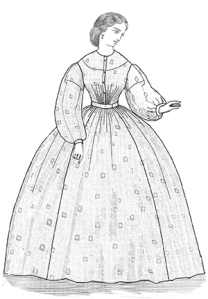
Truly Victorian TV447 1863 Sheer Dress

Truly Victorian TV447 1863 Sheer Dress

I chose a lovely sheer cotton in blue and white stripes that I found on clearance at a chain store. I know of more than one person who has made a sheer of this fabric. Hopefully we won’t all be at the same event together!
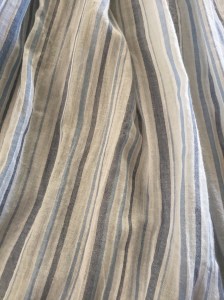
Pretty pretty

Pretty pretty

The fabric is 54″ wide, but since at the time I didn’t know what pattern I would be using I purchased 10 yards. Lucky for me, this overestimation was a good one. The sleeves on this dress are full and wide, plus since my fabric was directional, I was able to cut the stripes going from shoulder to wrist. Anyway, before any of that, I calculated my measurements and pattern size following the instructions on the pattern. The thing about the TV patterns is they allow you to custom fit your garment before you even start sewing. And once you do that, you can easily make up a muslin for a better idea on fit.

Dark image of my muslin

Dark image of my muslin

Sorry this is not better quality, but almost all the mirrors in my house that are big enough are impacted by light diffusion. What I learned here is that the waist of the under bodice was a little too full but the bust was a pretty good fit. So I took in the darts a bit and retested it. I did not do this all by myself, by the way. I submitted my questions to the Civilian Civil War Closet group on Facebook for hints and help – there are clothing historians, professional seamstresses and experienced clothiers there who are willing to help for free. I just couldn’t overlook that knowledge base. I also asked my friend Shelley Peters for real world tips as she has made this pattern a lot. Had I needed it, the amazing Heather McNaughten at Truly Victorian would have helped too. As an aside, this just confirms for me that this community really wants its members to succeed!

Anyway, after the changes to the muslin, I traced that as my new under bodice pattern piece and went forth to sew! This is the first time I have made my own bias and bias piping, which was used on the neckline facing and armscyes. I found the instructions sufficient, but had used better instructions on a Simplicity costume pattern and did that instead. They just made a bit more sense to my thinking, the result is the same.

IMG_2434

Piped facing to finish the raw edges of the under bodice.
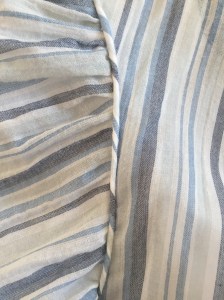
IMG_2439

Piped armscye

The construction of the garment is for the most part very easy. I found the TV method of inserting the sleeve into the armscye backwards to what I am used to so I just adapted and made notes on the pattern.

Hand buttonholes

Hand buttonholes

I sewed this in a combination of machine and hand sewing. My fabric was so very delicate that even though I have a high quality machine, it sometimes would bunch up in the feed dogs. I wound up hand sewing much of the finishing stitching, such as on the piped facings, and also hand sewed all the button holes. My reasoning here was twofold – I wanted historically accurate buttonholes and since the fabric was so delicate it was impossible for me to machine sew them to the standard I desired. I used silk thread for the buttonholes. The buttons are vintage shell buttons, much higher quality than the cheap flaked mother of pearl available these days. They were purchased through Farmhouse Fabrics.

IMG_2441

Sleeve band

For visual interest I cut the sleeve band on the bias. Maybe there is a chance of this stretching over time, but the band is so generous around the wrist that I don’t expect that to happen.

IMG_1985

Finished bodice

At this point, I went back to the Civilian Civil War Closet for help. The pattern does not include a collar pattern. I don’t care for my look without a collar, so I googled for tutorials. The best suggested laying the pattern pieces for the bodice front and back together as though they were sewn, then tracing the curve from center front to center back, next extending that to a simple collar width. I did that, but found mine to be fluttery and off. The amazing Liz Clark of the Sewing Academy helped me immensely with tips on how to correct this and redraft the collar. I’m delighted to say that I was successful!

IMG_2438

Finished collar

I added the fine tatted lace which I purchased at Farmhouse Fabrics.

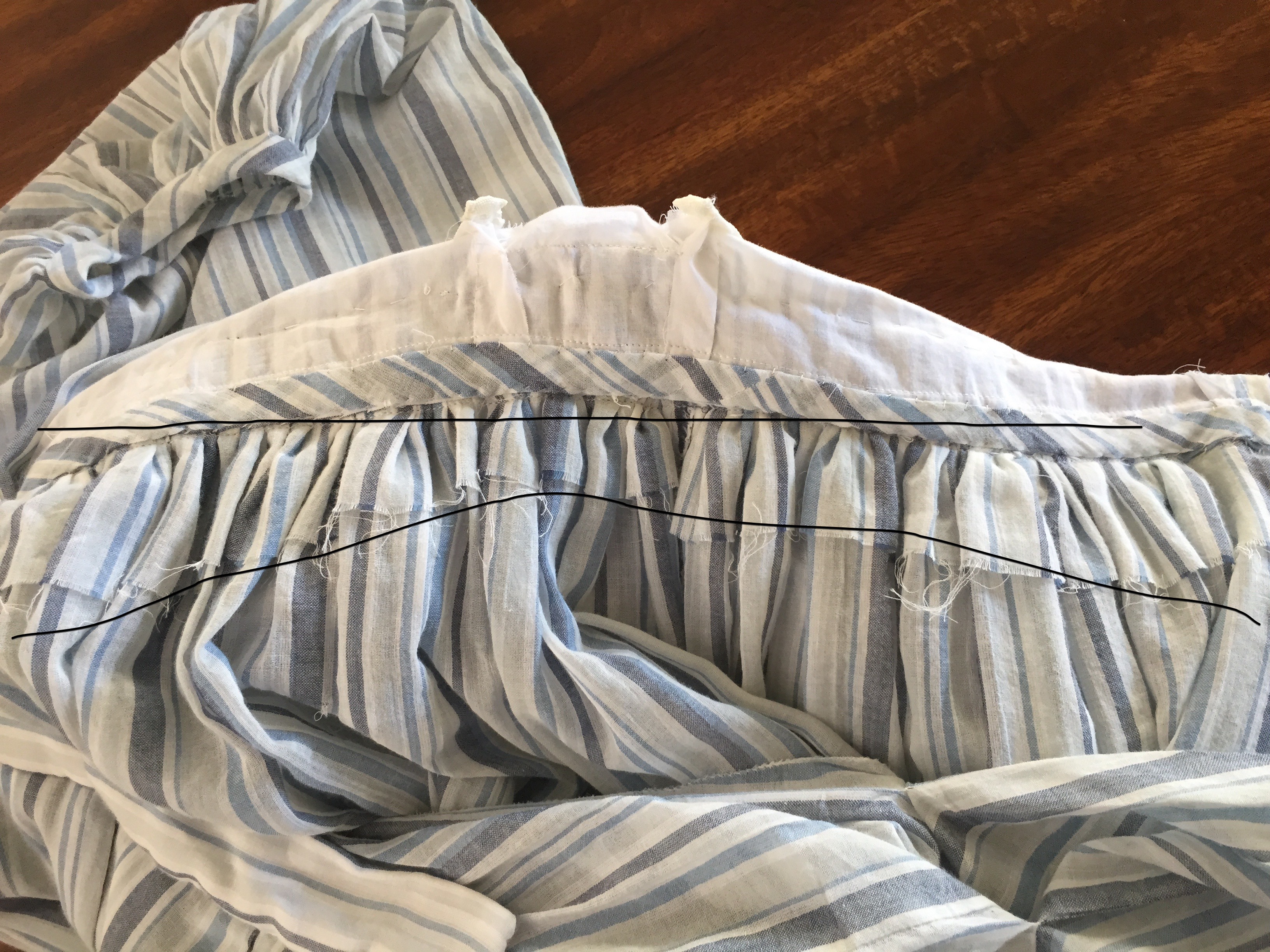
Next, waistband finishing. Since my fabric is 54″ wide, I didn’t want to cut it down to  four 40″ panels to follow the TV skirt instructions. I retained the selvages as was done in historical garments, and used three panels instead of four. The skirt has a very deep pocket at the center left where the skirt pieces overlap with the waistband. Each panel was cut to the same length, but since your skirt front and skirt back are different lengths, there has to be a way to do this without cutting your fabric. Again, drawing on the Closet knowledge, I did as was suggested and folded over the waist edge of the fabric. This gave added stability to the fabric as well as achieving the lengths needed. The pattern instructions have you cut your fabric at the waist to the desired angle which will give you your length. I don’t recommend that on a sheer just because of the off chance of it tearing.
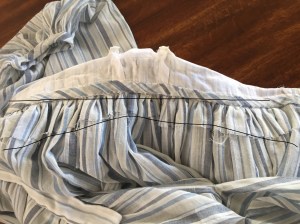
IMG_2446 -1

Waist inside

You can see in this very amateurly photoshopped picture the angle of the folded-over fabric. This is center back where the skirt is a bit longer than in the front.

IMG_2443

Double box pleats

For the skirt attachment, the pattern gives you liberty to choose your preferred pleating or gathering method. Here I am showing you the double box pleats I used to pleat the skirt onto the waistband. Originally I had knife pleated the front and cartridge pleated the back, but I didn’t get enough fabric taken up in the front. So I went to the double box pleats in front and cartridge pleats in back. I’m quite happy with this look as it’s smooth and polished.

IMG_2445

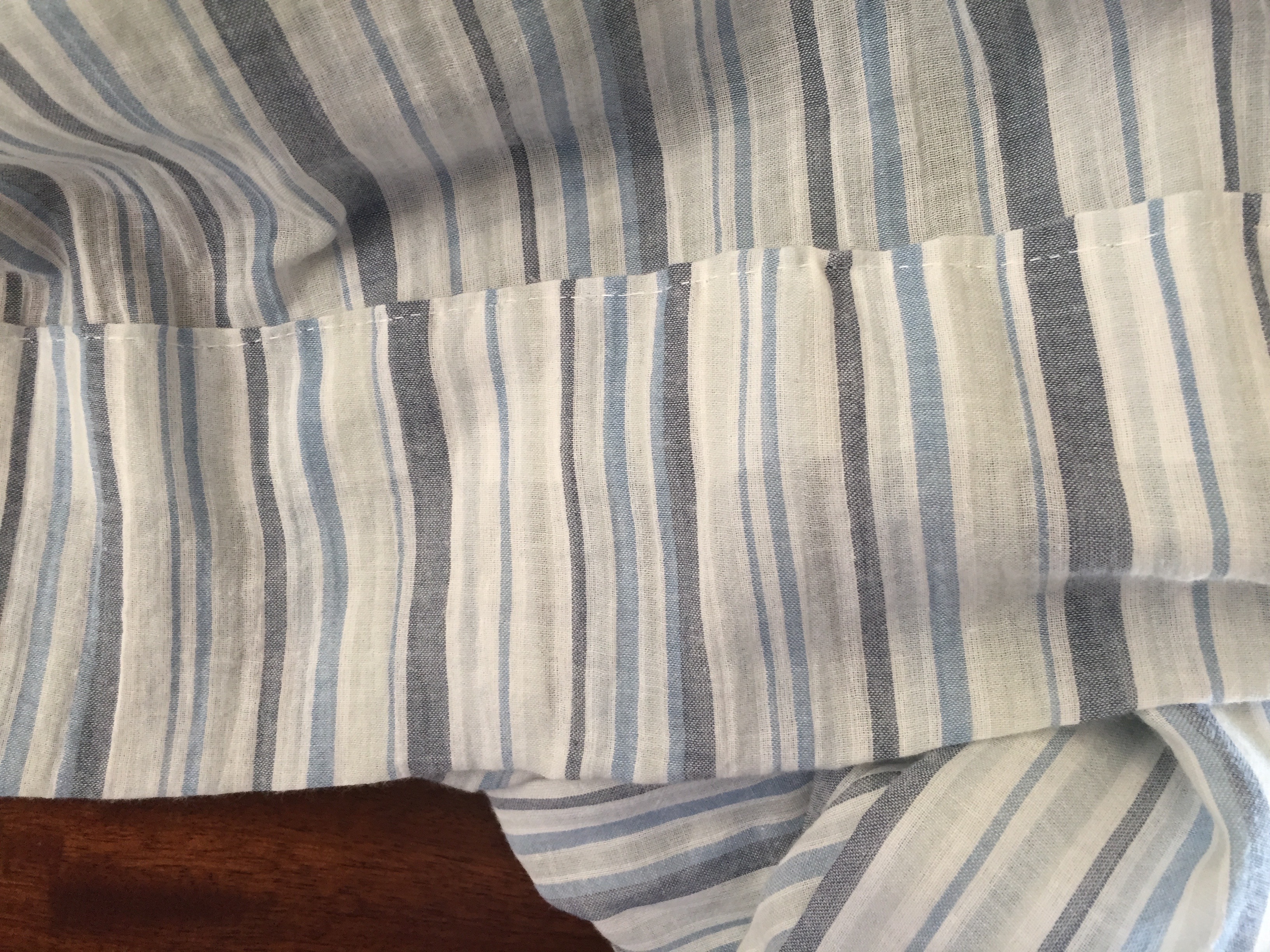
Yes that hem is hand stitched

I wanted to make sure that the hem folded straight up so the lines didn’t go off kilter, so I ended up hand sewing the hem. I used a single thread and every fourth stitch went through all layers. Every 8th stitch was taken twice to keep the thread from coming undone if it were to break for any reason. If you kept up with my thinking on the skirt width, you will realize that’s a 178″ hem. It took me a couple hours to do it.
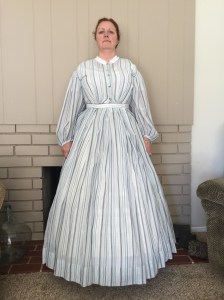
IMG_2447

Picture taken by an 8 year old

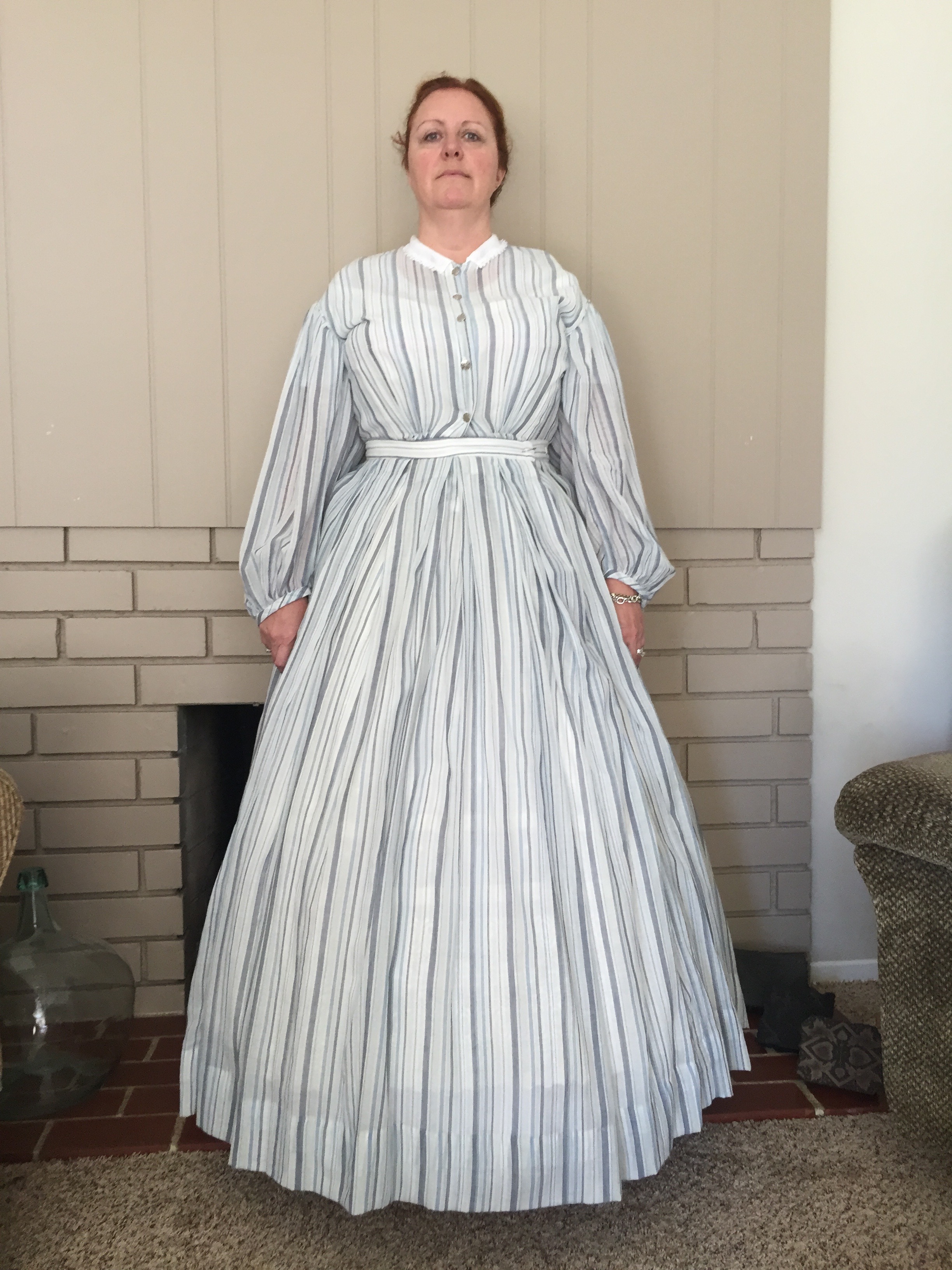
This is the finished dress, although it’s not the best picture of me lol. I’m looking down toward my daughter haha. Also, I realize that I must not have been laced as tightly in my corset as usual because I couldn’t fasten the waistband correctly. I wasn’t going to mess with it today and I’m certainly not taking the dress apart, so I’ll have to lace better next time.

IMG_2450 (1)

Side image

Here you can see the under sleeve just below my shoulder. This makes the dress very cool and airy. I had considered adding a silk stripe down the sleeve for interest, but I decided against it as it might weigh down the fabric. I may make a belt, as the silk I have is the exact color of the darkest stripe in the fabric.

You can also see the shadow of my petticoat under the skirt. I have an eyelet petticoat with two large pleats in it. This isn’t an historically accurate petticoat and someday I will make a plain cotton one, but for now this is quite pretty.

Overall I am thrilled with the result of the Truly Victorian TV447 Sheer Dress pattern. The instructions were easy, but true to the sewing techniques available to our ancestresses. It is not a pattern for a beginner, certainly, but if you have some knowledge of sewing, you can make this pattern truly customized to your preferences. If at times the instructions don’t make sense, just take them one sentence at a time. My mother told me when in doubt just do what the instructions say. These patterns will not take you down the wrong path, trust them and you will get something incredibly beautiful. And of course, email them, ask your friends who have made the pattern, or google for help. Truly Victorian patterns are very popular due to them being among the best on the market today, so lots of people make them! I am eager to wear this dress to one of our hottest events coming up soon, Huntington Beach Civil War Days.

Links & Resources

Truly Victorian

Farmhouse Fabrics

Civilian Civil War Closet

Sewing Academy

Huntington Beach Civil War Days
Dory Boats, revisited

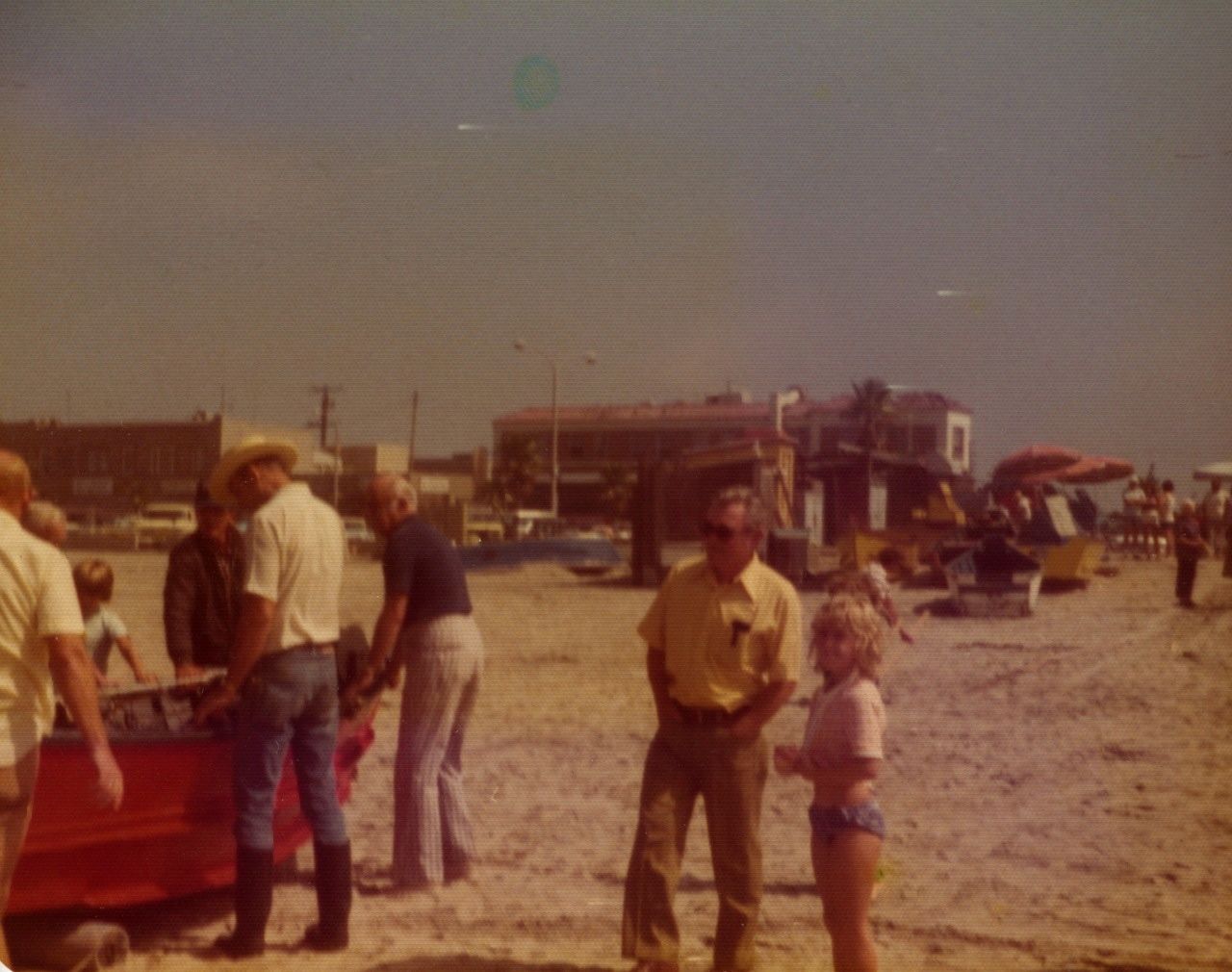
A few years ago, I wrote about a local fish “market” called the Dory Boats, down in Newport Beach. It is one of the few remaining places where fresh caught fish is sold, usually off the bow of the boat after it has bee hauled up onto the beach. As a kid, I went with my family on a number of occasions to pick up fresh caught fish for dinner. It was always better tasting than anything bought in a store. One time we went with my grandparents, and as I titled my previous blog post “An Old Man Feels Like a Young Boy,” my Grandpa Jim was right down at the boats, helping to pull them up across the shore. I knew there was a photo of this event and I searched for many years, but at the time of the post I didn’t have it. I could picture him clearly in his red & blue plaid pants and blue shirt. At the time he would have been in his 70s.

Recently, I found the photo.

Dory Boats, Newport Beach, CA

Dory Boats, Newport Beach, CA

That little kid is me, bathing suit bottoms and a tee shirt. I have no idea who I was talking to, probably just some guy. Grandpa Jim is at the bow of the boat, to the right of that fellow in the jeans & white shirt. Those men hauled the boat up the beach by pulling it across rollers. When the boat cleared a roller, someone ran the roller around to the front.

You can read the original Growing Up OC here.

Working with an antique bed frame

I love my antique bed. It has been in our family for over a hundred years. My grandfather slept in it, my mother slept in it, I slept in it, and now my daughter sleeps in it. I don’t know why a bed, such a mundane item of furniture, should hold my affections so firmly, but for some reason it does. I remember a long long time ago in Sunday School they were asking us littles about what we would be most sad to lose in a fire. I had no thought of the clothing, toys or other childhood treasures. For me, it was the bed. Even at that young age I had been captured in the spell of history, antiques and family treasures.

As a kid, I liked to crawl under the bed and look at the support structure, wondering about all the people who had slept on it. The supports of the bed originally consisted of five 2×4 slats that rest on small footers, a framed spring, and then the mattress. The top of the mattress was lower than the top of the footboard and it had a lovely sleigh bed profile. But, since that support structure was worn out and very old, my parents had a new box spring and mattress built. Of course, it is a non-standard size, so it had to be custom built. With the addition of the box spring, the top of the mattress became higher than the top of the footboard and for a while I was upset. I felt it spoiled the look of my bed. :-) We retained the slats to disperse the weight of the mattresses.

As an adult I learned about bed skirts. Particularly for an antique bed, which usually has a 12″-15″ opening below the bed, these are a great way to hide anything you store under the bed, or just give it a softer look. Since my bed has been modified from it’s original structure over the years, this project does not damage it any further. If your antique bed is in its original condition, think about whether you plan to take it on Antiques Roadshow before making alterations.

Because of the slats under my bed and the large box spring, I can’t simply lay the bed skirt over the box spring and leave it at that, so I had to devise a way to attach the skirt. First I tried a system of rails that lay over the slats, but I still had to remove the mattress (heavy) and box spring (insanely heavy) to install and remove the skirt. The other day I came up with the simplest of all methods: velcro.

Slats, underside of the bed

Slats, underside of the bed

Here you can see the slats and a bit of the underside of the bed. I apologize for how terrible these images are, but have you ever tried to take a picture of the underside of a bed? It’s not easy, haha.

IMG_4631

Velcro placement

I used adhesive backed velcro and placed it right on the edge of the inside underside of the bed frame.

IMG_4628

Velcro placement on the skirt

Next, I cut the center out of the bedskirt so that I had one long ruffle. I placed the other side of the velcro along the seam of the ruffle. Do not cut on the ruffle side of the skirt – I left about 2″ of the center portion as a buffer, just in case my measurement of the drop was off. I broke the velcro into three sections – side, foot and side – making sure to allow room to go around large corner posts. First, place the velcro on the bed frame. Then place the velcro on the skirt. The measurement should match up exactly. With this particular bed, I used a queen sized skirt because the bed is not a twin and not a full. I took a large pleat in the center of the foot section to make up for the overage. Continue along the other side until the skirt is placed.

IMG_4626

Completed bed

The finished bed looks lovely! Since my black cat likes to go under the bed to hide, it will now be much easier to remove and wash the skirt to remove her hair that sticks to the skirt. If I decide to change the skirt for some reason, I will leave the velcro in place on the bed frame, and just reuse the pieces on the skirt. Keep in mind that the adhesive may wear out over time and you may need to baste the velcro onto the skirt.

Good luck with your antique bed, just remember to work with it, not against it!


LG Refrigerator

Sometimes it’s the little things that make you happy. Even though this was an unexpected expense, I am thoroughly delighted with our new LG door-in-door refrigerator!

IMG_3825

Front of my shiny new ‘fridge

We ordered the refrigerator from Home Depot after price shopping. Fortunately, we had recently been dreaming about a new fridge and had seen this model in person. The Home Depot online order was simple, click click click, plus we were able to call customer service and speak to someone live at 10:30 p.m. Refrigerators have a way of quitting at the most inconvenient times. Like right before bed.

IMG_3826

Door in door feature

Inside the door, there is a small door giving access to whatever you put on those shelves. We chose to put drinks, since it keeps them out of the way, available to all of us since we have three different preferred drinks, and Melody loves being able to open up and get her own drink. No more digging past the yogurt and leftovers for a water.

IMG_3827

French door style opening

This apparently is called French door opening, because the doors open out like that. You can see there is ample storage in here for tons of food. We don’t have a lot right now because I didn’t have enough space in my beer fridge in the garage to save everything. I had to throw out a lot of food that would have just spoiled. The time between the order being placed and delivery was five days, ouch!

IMG_3829

Three tiers of freezer storage

I have always loved the freezer on the bottom, because I don’t get into the freezer as much as the fridge. I’d rather bend over occasionally instead of stooping all the time. I also despise side by side because there is just skinny deep shelves. I was amazed as I was digging out all sorts of frozen stuff I had forgotten about! Also, the ice maker is inside the door of the refrigerator, which gives you lots of space inside the freezer. The three tiers will be great for organizing popsicles in the summer away from the meats and frozen dinners, things like that.

All in all, I am such a married mom, but completely delighted and overjoyed with this wonderful refrigerator!


Happy Anniversary to us!

Nine years together! We celebrated by going to Las Vegas….by ourselves! Gramma and Papa came over and stayed with Melody and we visited the fabulous shows and sights of Sin City. We finally saw Love, the Beatles tribute show by Cirque du Soliel, which I have been wanting to see since Melody was born. It was truly amazing! The visual and aural spectacle is beyond what I expected and really does celebrate the magic of their music – especially considering they were really only making music for 7 years. That music has endured and finds new fans still today.

Next we saw the Titanic Artifact Exhibit – a collection of items recovered from the wreck site at the bottom of the Atlantic ocean. The exhibit also includes much historical information and even a corridor built to look and sound like the second class section of the ship. Most impressive is a recreation of the grand staircase, which was made famous in the movie, but which was popular in its own right in 1912. The exhibit is moving, sad, and tastefully presented.

Last but not least, we saw Absinthe – a show that we thought was going to be a magic/burlesque type show, but which turned out to be a comedy/acrobatics/burlesque show. Amazing feats of physical strength, arial dancing & acrobatics, and a funny story made for an interesting evening.

One thing I remembered about Vegas….everything smells like cigarette smoke and it takes forever to get there and to come home. But otherwise, we had a wonderful trip!

Car Seats

I have often thought about how important car seats are for keeping kids safe in the crazy traffic here in Southern California. There are all sorts of laws in place today mandating the use of carseats and Consumer Reports tests them annually to find the safest ones on the market. But there was a time when a car seat was a novelty, and not designed for safety at all. Originally they were designed just to keep kids in place – the earliest child restraint was a bag that tied the child to the seat back!

kids 2

Not until 1978 Tennessee become the first state in the nation to implement car seat laws for children (go Vols!). If you ever wondered what an early car seat looked like, I found this great photo in an antique shop, dated 1950. Wow!

More vintage-y pictures

I’ve been to a few more historical events recently, so I thought I’d put together some more vintage looking photos for your enjoyment. Ok, really I enjoy making them, so it was for my enjoyment. But you are always welcome to bask in my amazingness. You’re welcome. The full gallery of images is below.

photo-22

Our young Logan Bingham is in this photo, taking his first shot in battle

photo-18

I made this faux cabinet card for a friend

photo-25

This one is a photographic study of photos

Vintage photos

My sister told me about this great application for the Mac called VintageScene, a program that has preset filters that make your modern photos look aged and vintage. Of course, John commented that we have progressed so far from the early cameras and their print quality, only to create apps that make photos look old and worn. I think that goes to show that the early photographers were artists, while today any Tom Dick or Harry can take a snapshot with their phone. Here are a few of the aged photos I created.

Here a stand of cannon and an ammunition wagon.

Next, our friend John Smolley as Jefferson Davis, President of the CSA.

This is Logan B., who has grown up so very fast, and now he’d rather march with the Army than play in the parlour, sigh…

I created an album in the gallery called The Vintage Scene where there are a few more aged photos. I will continue to play with this because it’s lots of fun!