Martha Tudor – Part 1

As a fan of Tasha Tudor dolls I regularly check eBay for new items listed. The most common dolls are Meg, Emma, Sally and Nell. Less common but still occasional are Molly and Dora. I have seen Amy, Julia, Lady Patricia, Trudy and Martha only once. When I see these uncommon dolls listed I usually put on a really high maximum bid because I don’t want to lose them.

While I was finishing Julia, I saw an auction for Martha, placed my stupidly high bid and waited for the auction to close. I hate auctions lol. Anyway, I won her and waited with great excitement to receive her because I have only heard of her from a site visitor – never seen before the auction.

The box arrived. Crushed.

Martha had a visit to the French Revolution via USPS or UPS or however she was shipped.

The seller has refunded me.

I lamented this happening to my family and my daughter suggested trying to glue her back together. Could I do that?

I found a number of articles online about fixing a broken chest plate on a doll. A couple referred to this porcelain and ceramic glue.

It comes with some very fine tube tips for highly precise glue application. I felt a bit like one of those artisans at a museum putting together shards of pottery. Ok not really. I actually was thinking of all the moms and dads through the years gluing dolls and cookie jars after the kids got too rambunctious.

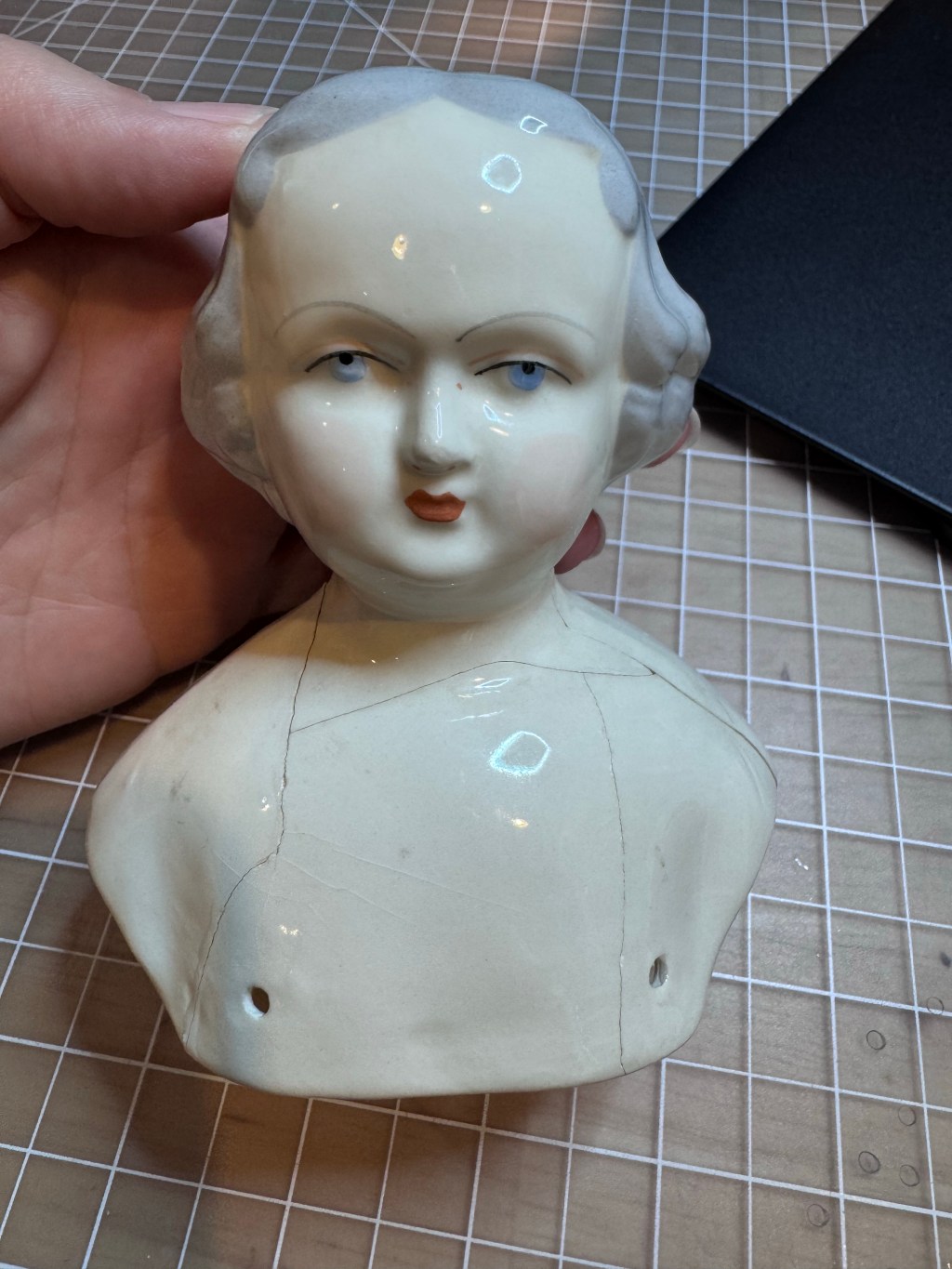
Fortunately Martha’s head is intact! I carefully removed the pieces from the body, then tried to figure out how the parts would fit together. A bit of glue on the broken edges, then pressing them together for 30 seconds created the basic bond. This glue needs to cure up to 24 hours.

I’m not thrilled with one seam. I didn’t want to force the porcelain into place and the seam is off just a smidge.

I applied glue to the cracks inside and outside as well. There are a couple of holes where bits of the porcelain has been lost.

When it comes time to reunite her head with her body I may use glue instead of sewing tapes because I don’t want to put too much stress on the china. I am also considering strapping over her shoulders. I had to do that with Julia as her chest plate had cracked between the hole and the edge. There may be a few other alterations in her future as well – painting on gold shoe buckles, stitching in elbows and knees, little things like that.

Needless to say, Martha will have a high necked dress. I will also be trying to style her in Colonial attire. That’s an era I know nothing about clothing wise, so this one will really be a learning experience for me!

I was going to dress Lady Patricia next, but I think she’s going to have to wait a bit longer!

I also need to do something about her linebacker shoulders haha.

Here Comes The Bride

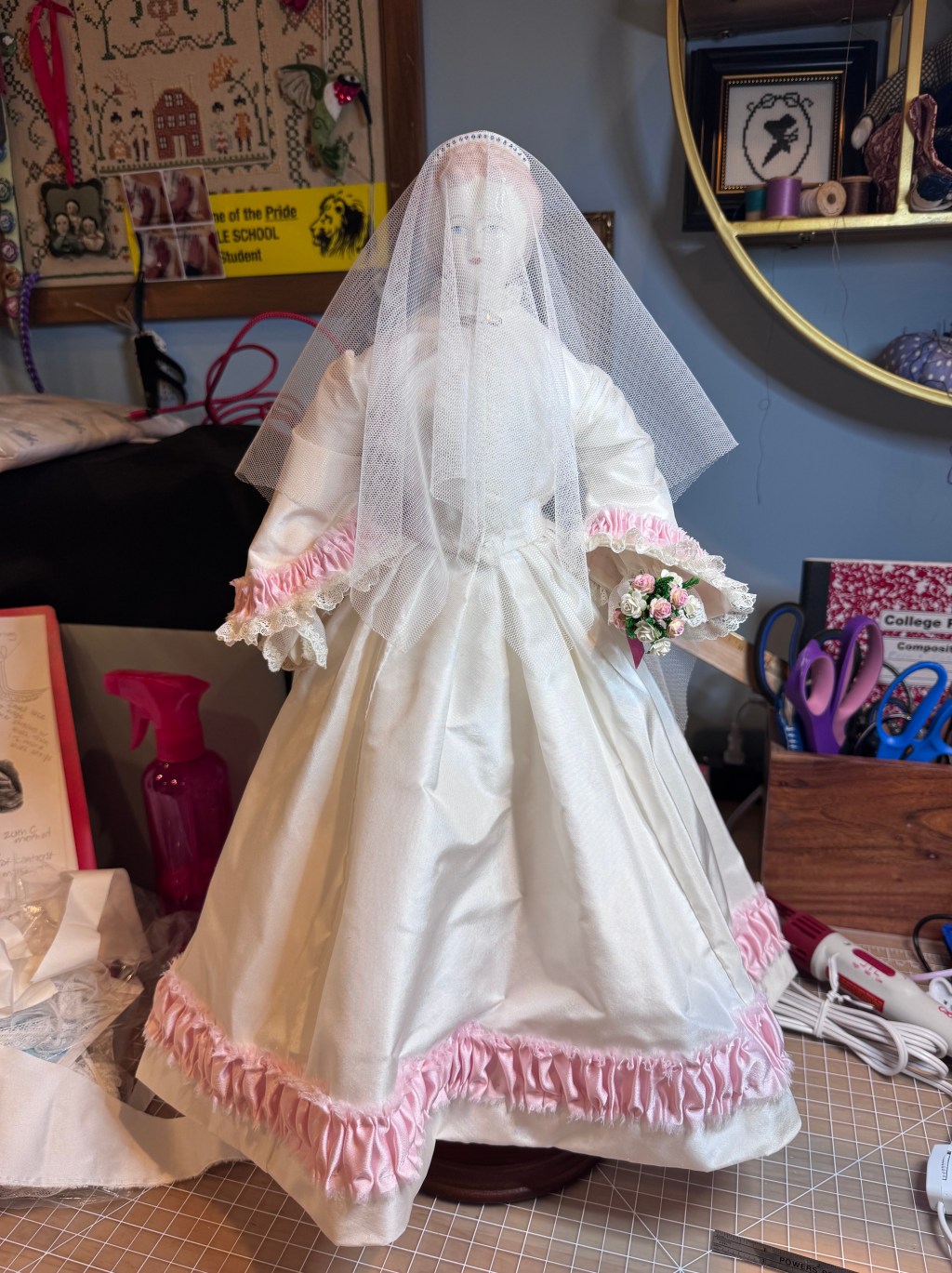
When last we met, I was just about ready to make the final garment for Julia Tudor, our lovely bride in 1872. Last night, I took the last stitch. I placed a demure pin on her bodice and then draped her veil over her head.

Yes, the work table is a mess. I was so excited to be finished with this project that I could not wait to snap some pictures!

Unfortunately you cannot see the under sleeves that I made from silk organdy. They have a bishop sleeve (meaning gathered at the wrist) and then I added some gorgeous, lightweight French lace. The bouquet is made from paper flowers and is tied to her wrist with a rose pink silk ribbon. During the dress construction process, I added a seam across the part of her arm where an elbow should be, so the hand holding the bouquet is a bit easier to place.

Here you can better see the trims and the bar pin. It is a vintage pin that I bought some time ago and always thought would be perfect for a pretty doll. The sleeves of the bodice are wide pagoda sleeves which allow for movement of the hands. I’m not normally a lace and ruffles person, but I felt that for this wedding dress, the more lace the better. The pink silk satin ribbon I used on the skirt is seen here. I had to cut its width by half and then fray out the cut side. That was a project in itself, but very worth it!

And here we have the butterfly basque, something today we might call a peplum or bustle. It is attached to the bodice and features the pleats that allow it to stand out. I found an image of an extant gown from 1872 with this exact basque style with the lace trim. I had to emulate it!

Screenshot

The full dress is lined with silk organza, which isn’t the best lining material, but I’d gotten too far into the project by the time I realized it. So, onward and upward I suppose!

I’m now considering what doll will be next. Julia was entirely hand sewn, but as a 20″ doll I could have used my sewing machine except for the very small bits or delicate parts. I may consider making Amelia, the bloomer suit wearing progressive from the 1850s as I found an 1850’s modeled doll kit and she will be 18-20″ when completed. My hands might appreciate the break. I can also make that outfit from a less finicky fabric like wool or a wool/cotton blend. So stay tuned and I’ll catch you up again soon!